
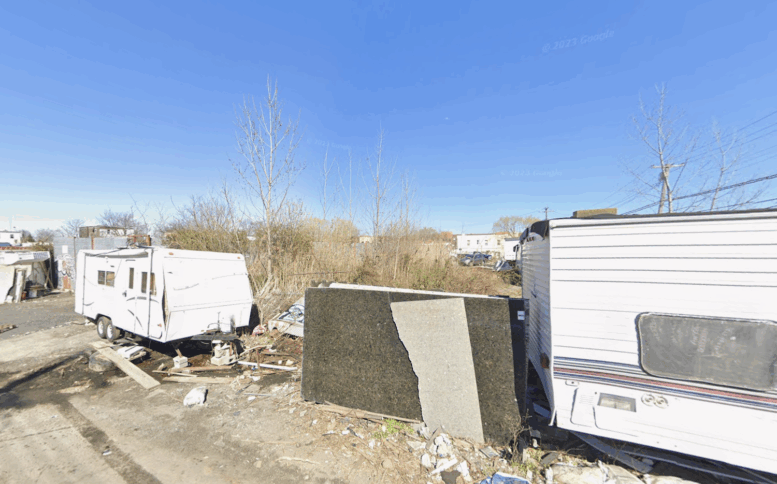
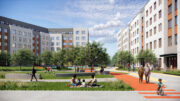
Permits have been filed for a four-story residential building at 133–39 Ruby Street in East New York, Brooklyn. Located between Blake Avenue and Dumont Avenue, the lot is on the Queens-Brooklyn board and closest to the Grant Avenue subway station, served by the A train. Aron Stark of MSH Equities LLC is listed as the owner behind the applications.
The proposed 39-foot-tall development will yield 46,997 square feet designated for residential space. The building will have 70 residences, most likely rentals based on the average unit scope of 671 square feet. The concrete-based structure will also have a cellar and a 46-foot-long rear yard.
Leandro Nils Dickson Architect, LLC is listed as the architect of record.
Demolition permits will likely not be needed as the lot is vacant. An estimated completion date has not been announced.
Subscribe to YIMBY’s daily e-mail

Follow YIMBYgram for real-time photo updates
Like YIMBY on Facebook
Follow YIMBY’s Twitter for the latest in YIMBYnews
Places like this in the outer boroughs are were new affordable housing will be built.
This is the infamous “Hole” neighborhood which floods frequently due to its low elevation. Some landfill could be in order.
I’m not necessarily complaining that piecemeal development is occurring in “The Hole” but I do think it would be best to have the city target this wasteland as an enormous municipal funded planned development that saw the elevation raised and coherent unit goals set out. IMO a properly redeveloped Hole has the potential for 10,000 housing units. A 60′ building height should be the minimum.
133-39 Ruby Street IS IN QUEENS NOT EAST NEW YORK. BROOKLYN
Lol THE HOLE. the place has no sewer lines or flood prevention mechanisms. It’s basically like a dirt town in the 19th century Midwest.