
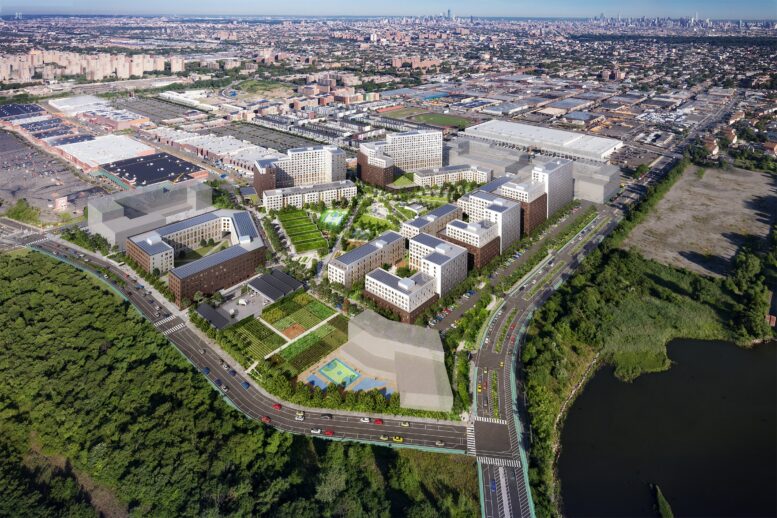
Developers and officials recently celebrated the opening of the first phase of Alafia, a mixed-use community development in the Spring Creek section of East New York, Brooklyn. Designed by Dattner Architects and developed in a joint collaboration between L+M Development Partners, Apex Building Group, RiseBoro Community Partnership, and Services for the UnderServed, phase one features conjoined 12- and 15-story structures yielding 452 supportive apartments and a separate six-story building with 124 units. The project also features 7,800 square feet of retail space, 11.3 acres of public green space, and 15,000 square feet of medical healthcare space for One Brooklyn Health.
The full master plan will yield 2.23 million square feet spread across 28.5 acres and a total of 2,400 affordable homes. Alafia is bounded by Fountain Avenue to the northeast, Schroeders Walk to the northwest, Seaview Avenue to the southeast, and Erskine Street to the southwest.
A ribbon cutting ceremony was held on December 12 attended by State agency commissioners, executives from the development team, Governor Kathy Hochul, and local elected officials.
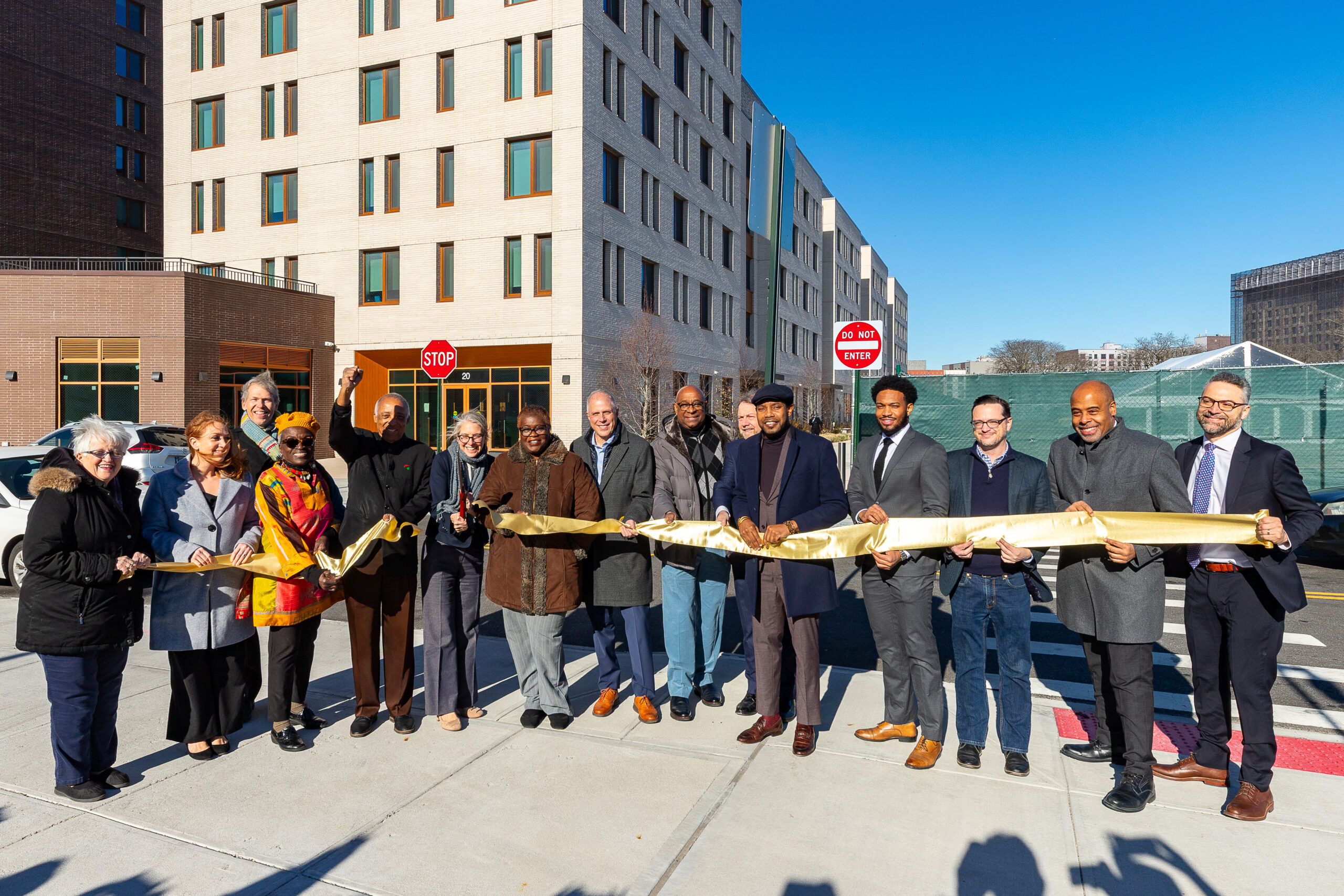
The ribbon cutting ceremony at phase one of Alafia. Image courtesy of Heller.
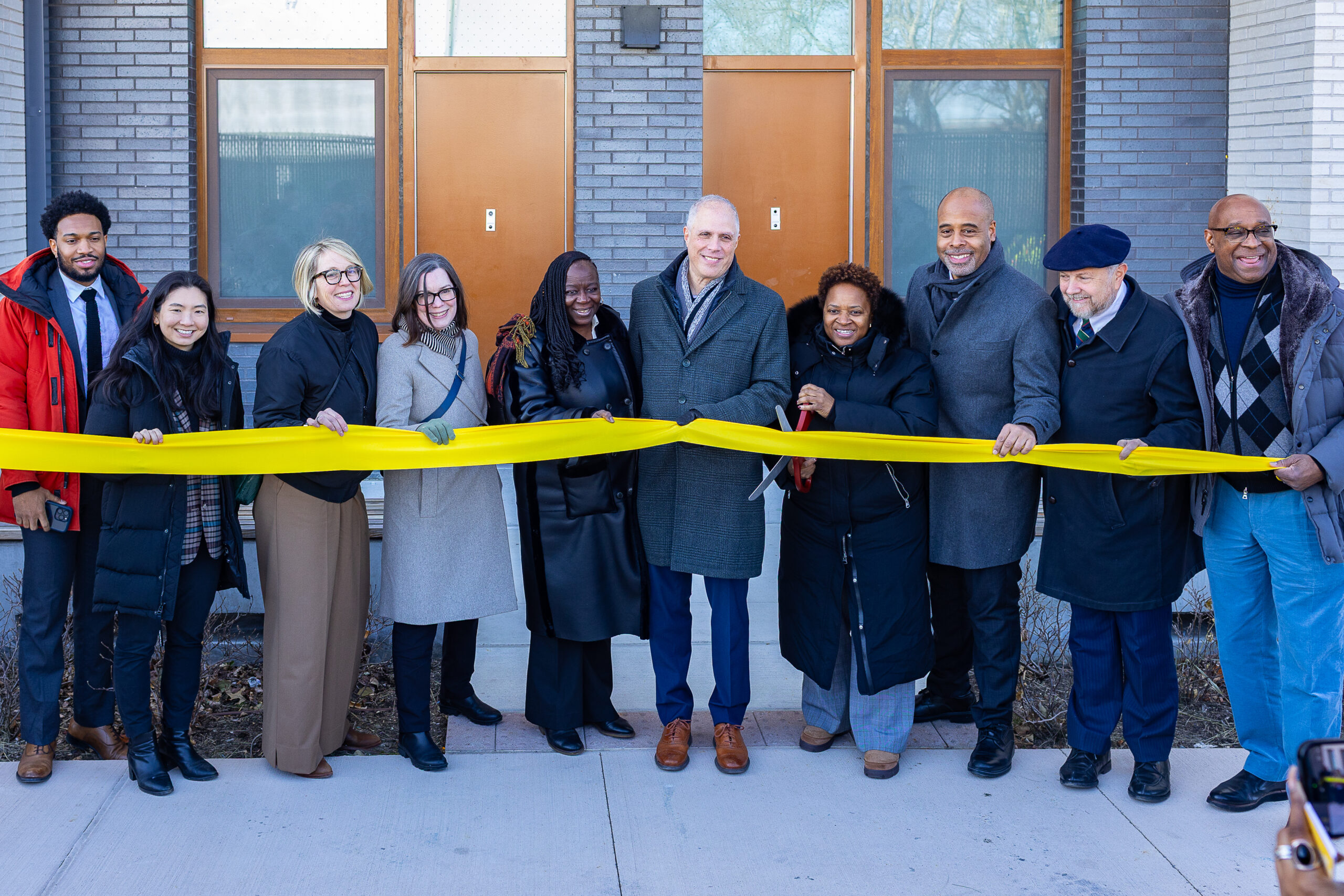
The ribbon cutting ceremony at phase one of Alafia. Image courtesy of Heller.
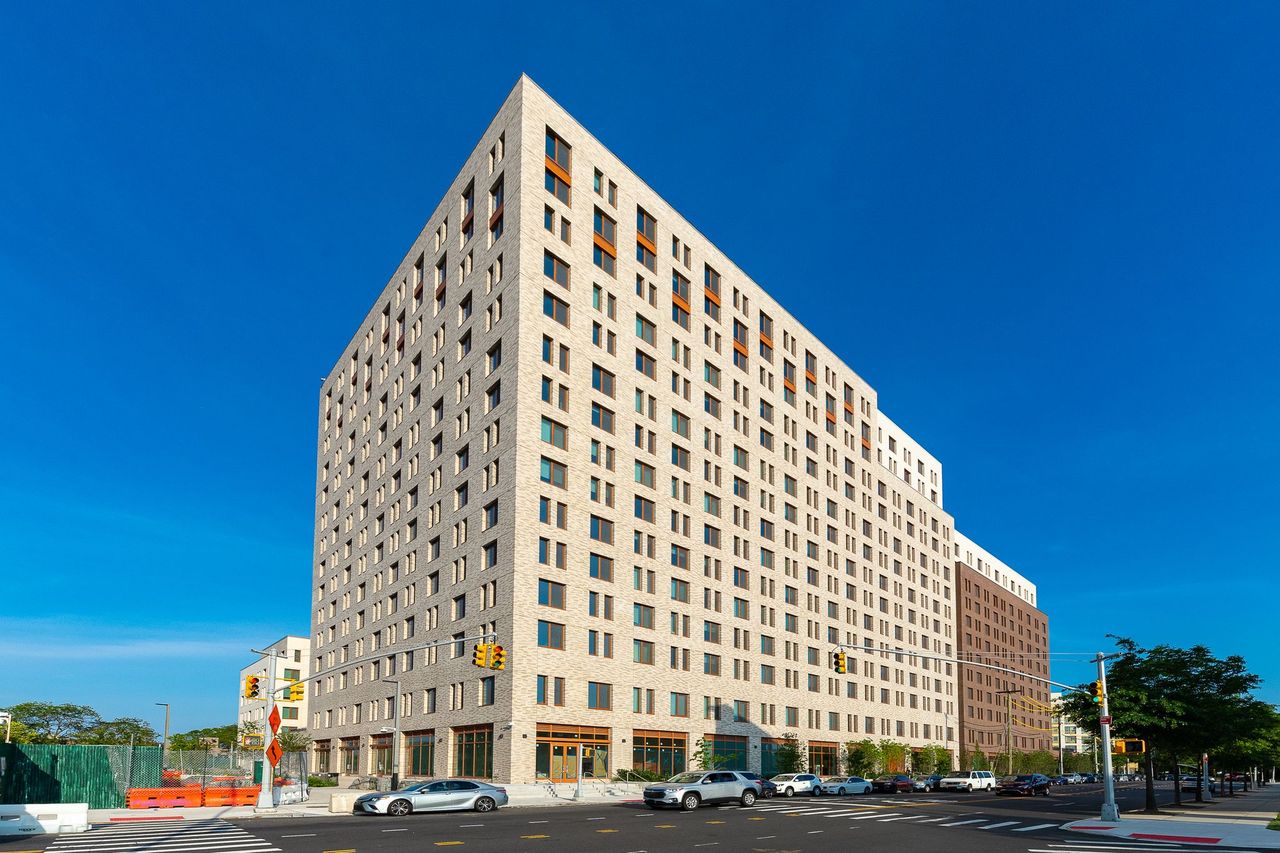
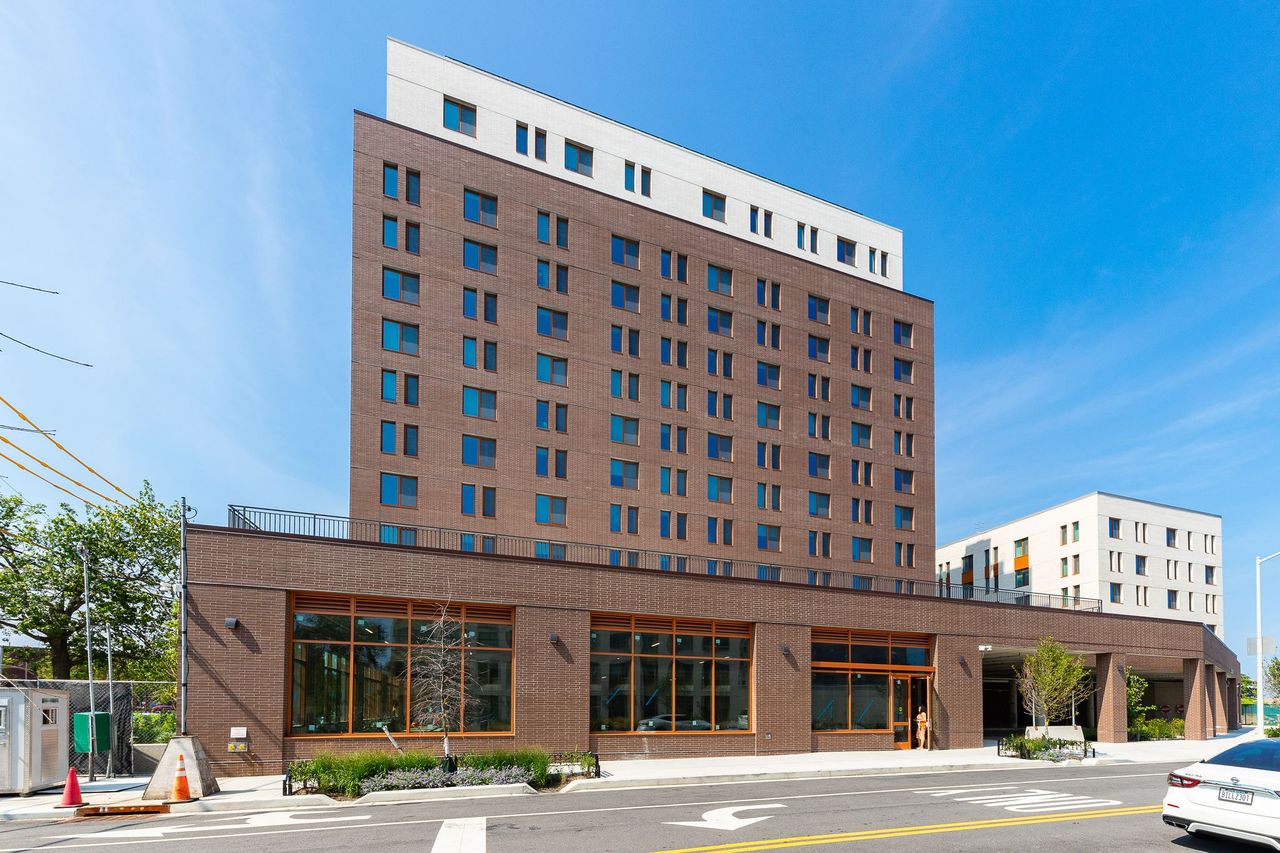
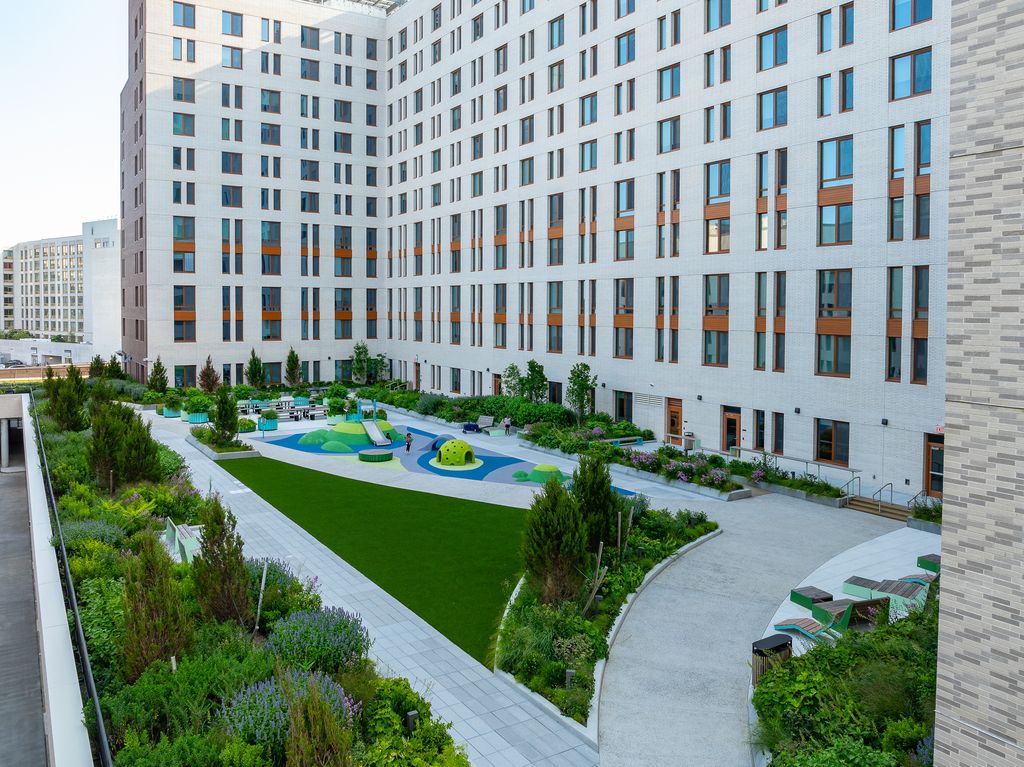
The following images show the buildings completed in phase one.
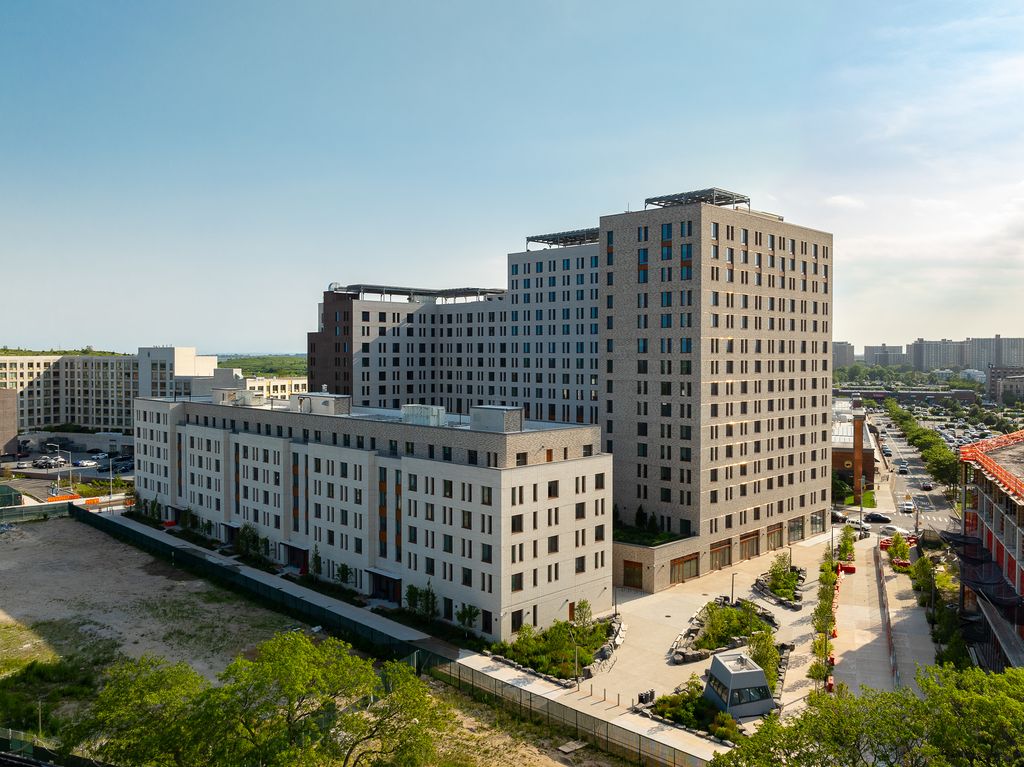
Alafia phase one. Image courtesy of Heller.
Alafia phase one. Image courtesy of Heller.
Alafia phase one. Image courtesy of Heller.
Alafia phase one. Image courtesy of Heller.
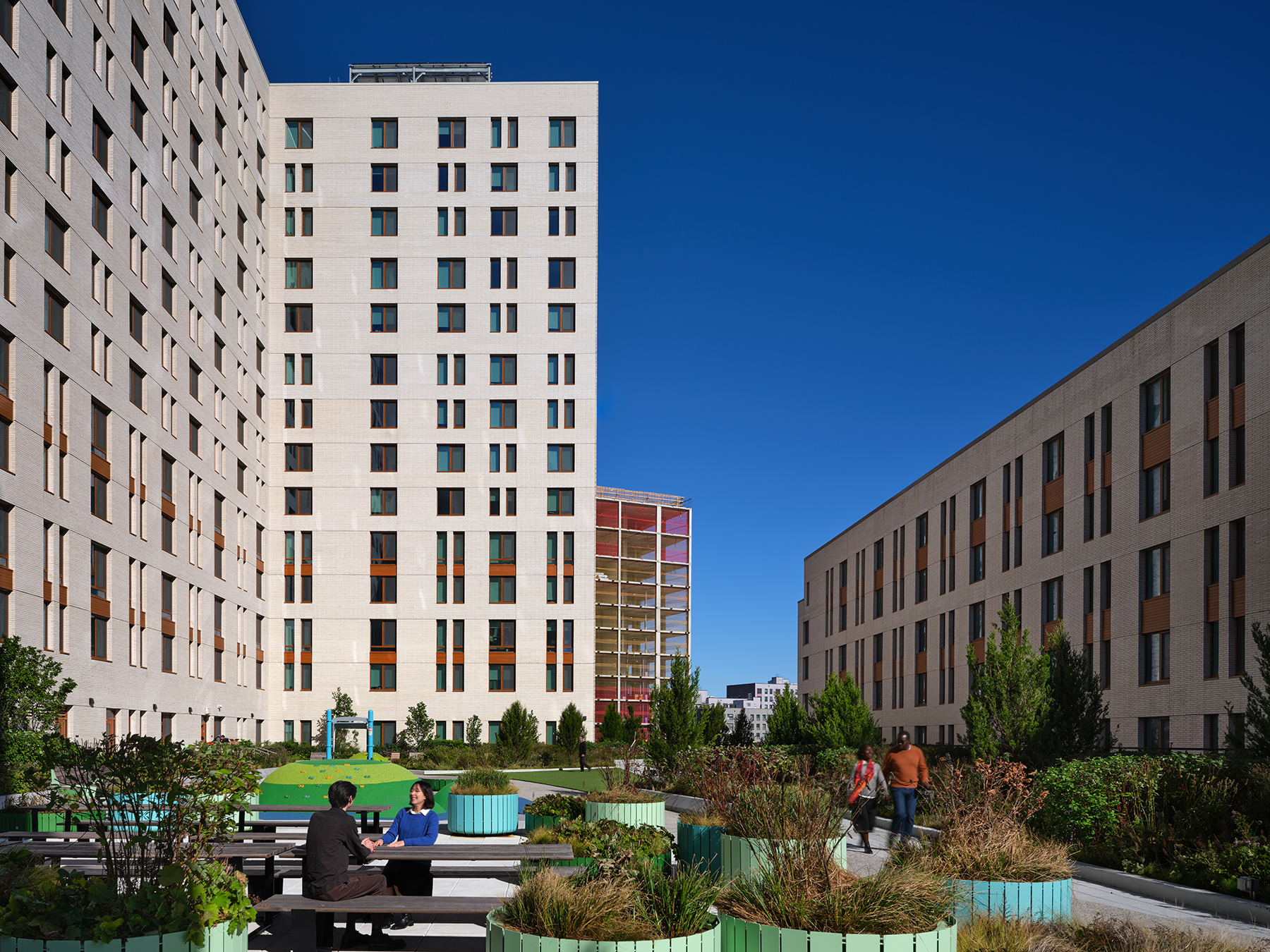
Alafia phase one. Image by Chris Cooper.
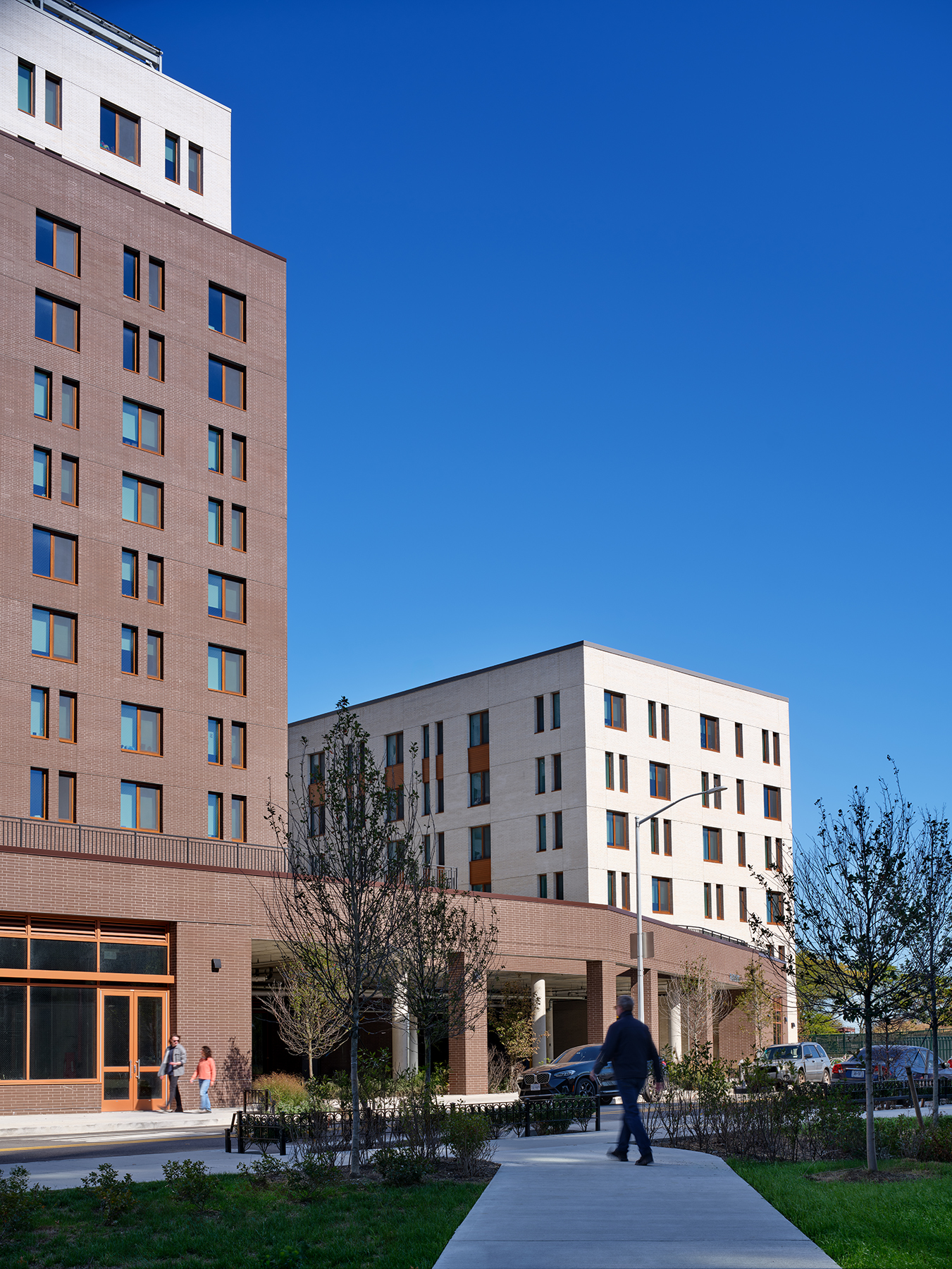
Alafia phase one. Image by Chris Cooper.
Below is a diagram showing the entire Alafia master plan aligned facing northwest.
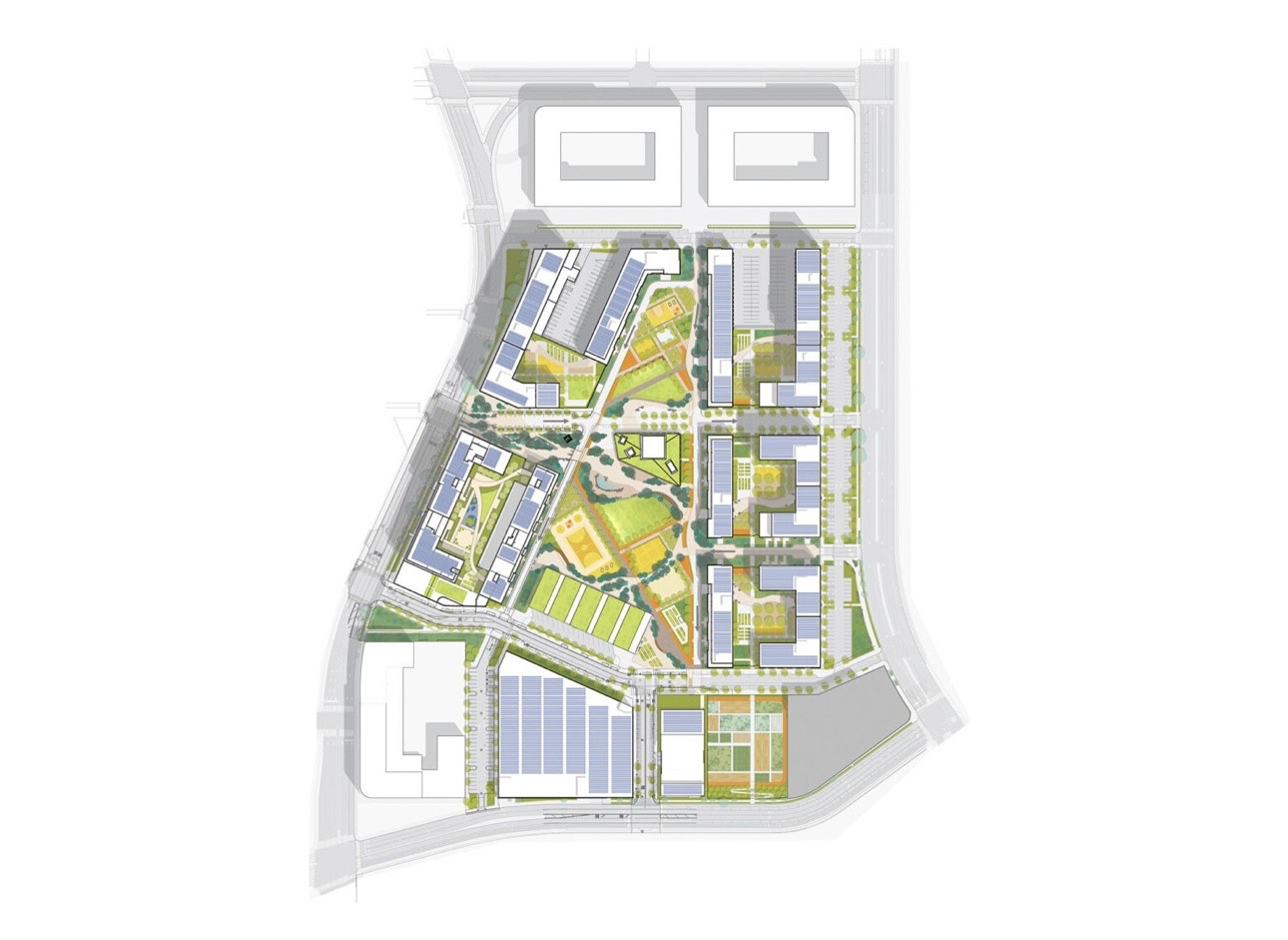
Alafia master plan. Designed by Dattners Architects.
Phase one is outlined in the following image. This phase consists of Buildings C1 and C2 along Erskine Street, and Building C3 across the central courtyard. All three properties offer affordable and supportive housing, indoor and outdoor amenity spaces, a social services suite, a health clinic, and ground-floor retail spaces.
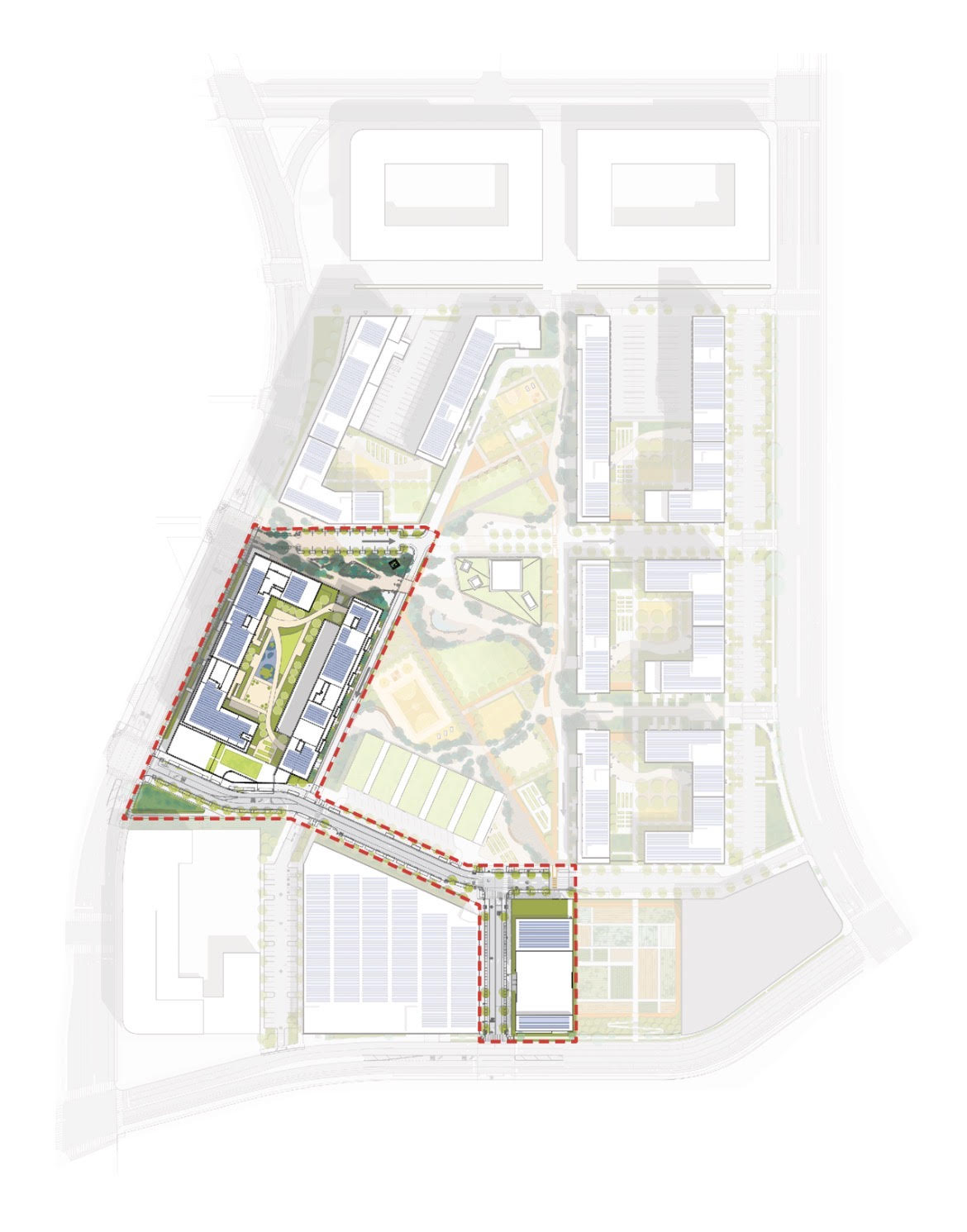
Alafia phase one. Designed by Dattners Architects.
The shared courtyard between the first two buildings covers the enclosed parking space below and includes an urban farm, ping pong tables, outdoor dining, a toddler play area, communal lawn, lounge seating, and a green roof. The buildings will be designed to Enterprise Green Communities and Passive House Standards. SCAPE Landscape Architecture is serving as the landscape architect.
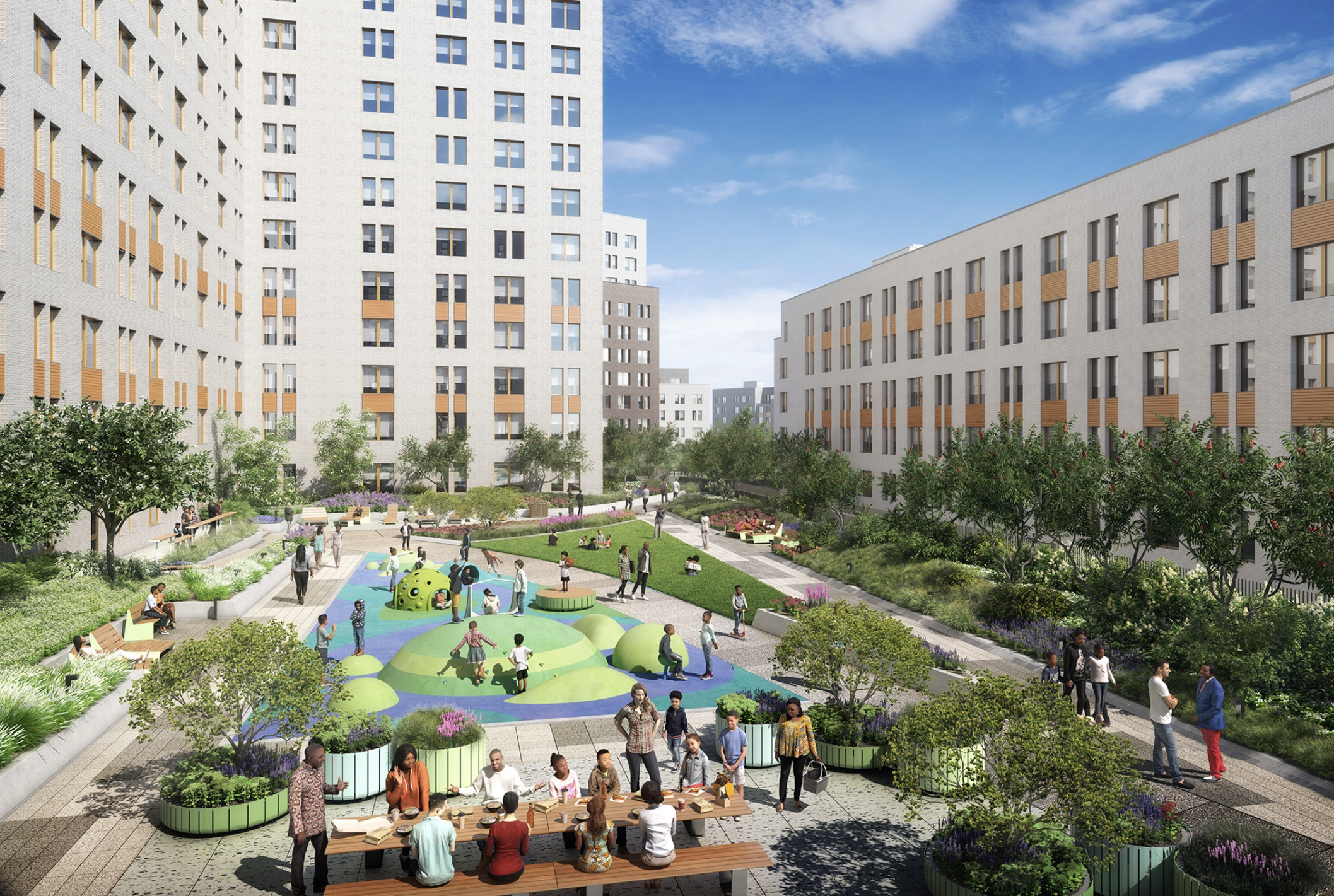
The central courtyard between Buildings C1 and C2 at Alafia. Designed by Dattners Architects.
The buildings’ façades are largely composed of gray and brown brick framing recessed windows with gold-hued mullions. Raised garden beds and ramps flank the entrance.
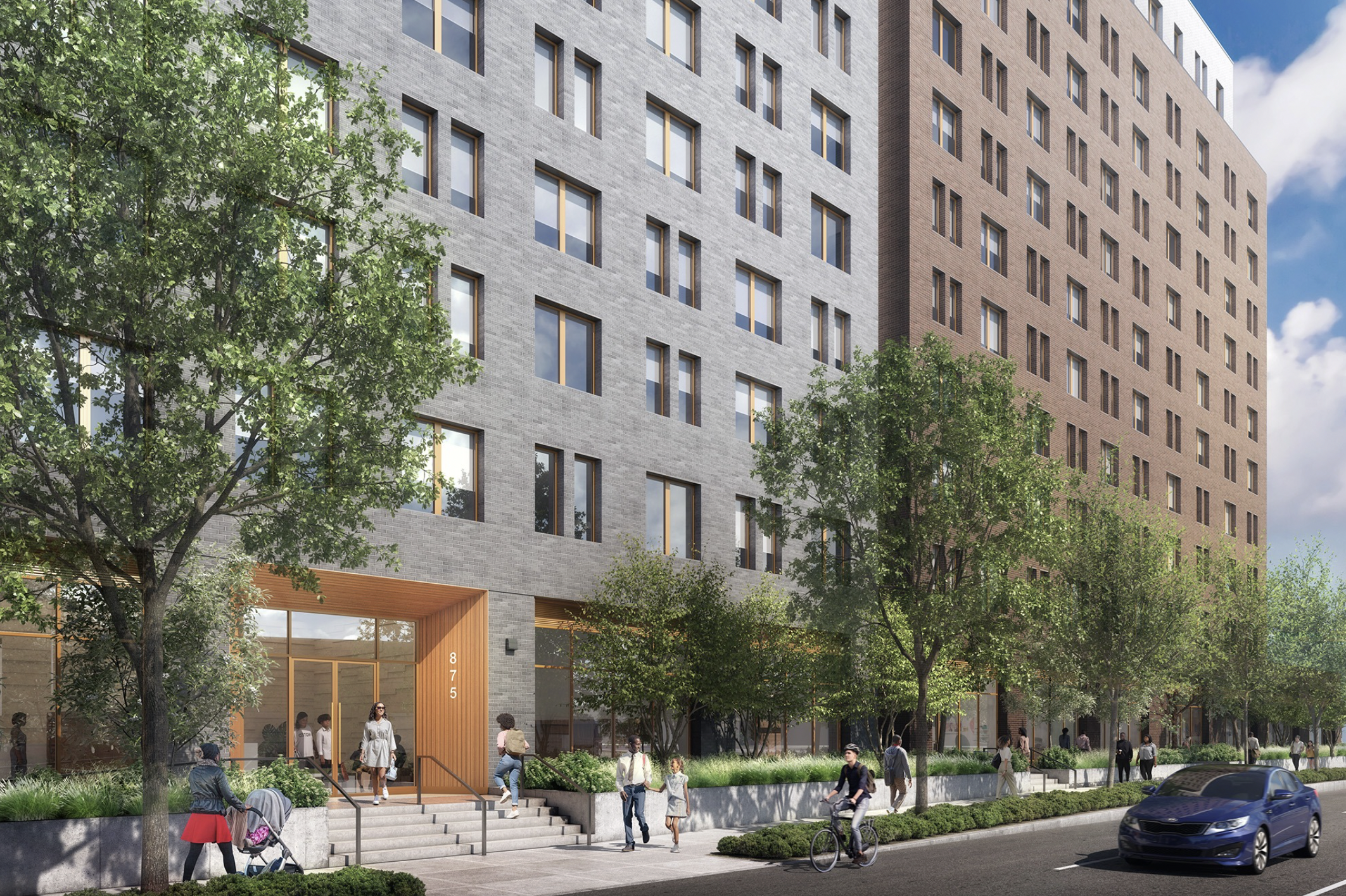
Alafia phase one. Designed by Dattners Architects.
The following image looks east at structures in future phases of Alafia.
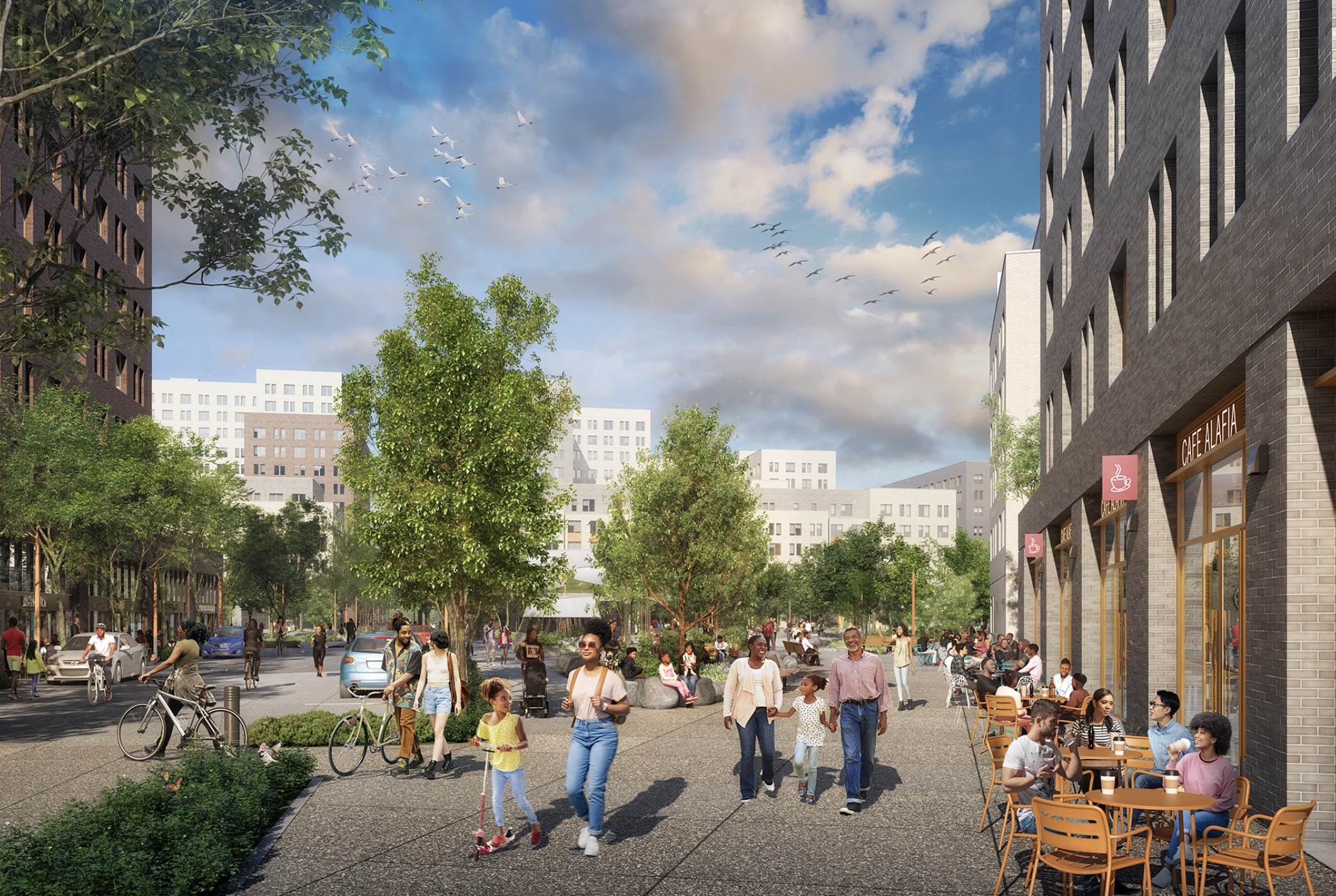
Alafia phase one. Designed by Dattners Architects.
Below is the shorter six-story structure with a uniform white brick cladding and several sections of wooden spandrels between the window grid.
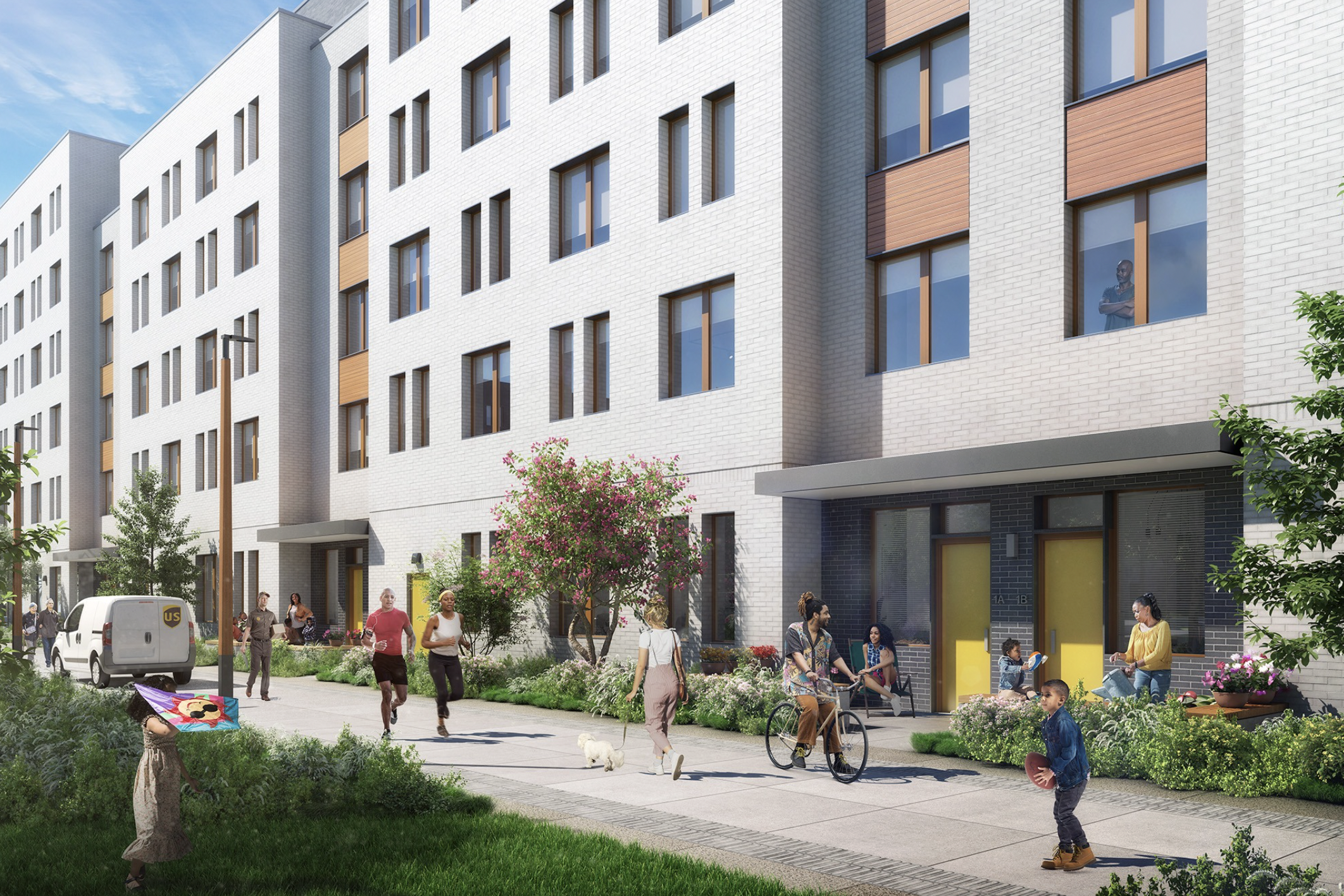
Building C3 at Alafia. Designed by Dattners Architects.
Alafia’s first phase cost $387 million and apartments are available to households earning up to 80 percent of area median income. Of the total inventory, 132 units are dedicated for the formerly homeless, those with intellectual and developmental disabilities, and senior citizens. On-site services will be provided by S:US, funded by the Empire State Supportive Housing Initiative (ESSHI) administered by the New York State Office of Mental Health (NYSOMH) and the New York State Office for People With Developmental Disabilities (OPWDD).
Sustainability commitments at Alafia include site-wide reduced energy consumption through Passive House Design for all residential buildings, geothermal and stormwater management, and on-site green energy generation provided by rooftop solar panels and a fuel cell coupled with a biodigester powered by waste from on-site urban farms. These farms are planned to produce up to 180,000 pounds of fresh annual produce.
Alafia will also feature a maintenance hub that will collect and regulate trash and recycling at a centralized location in the middle of the master plan. The hub will feature a composting facility to process organic materials with an in-vessel composter.
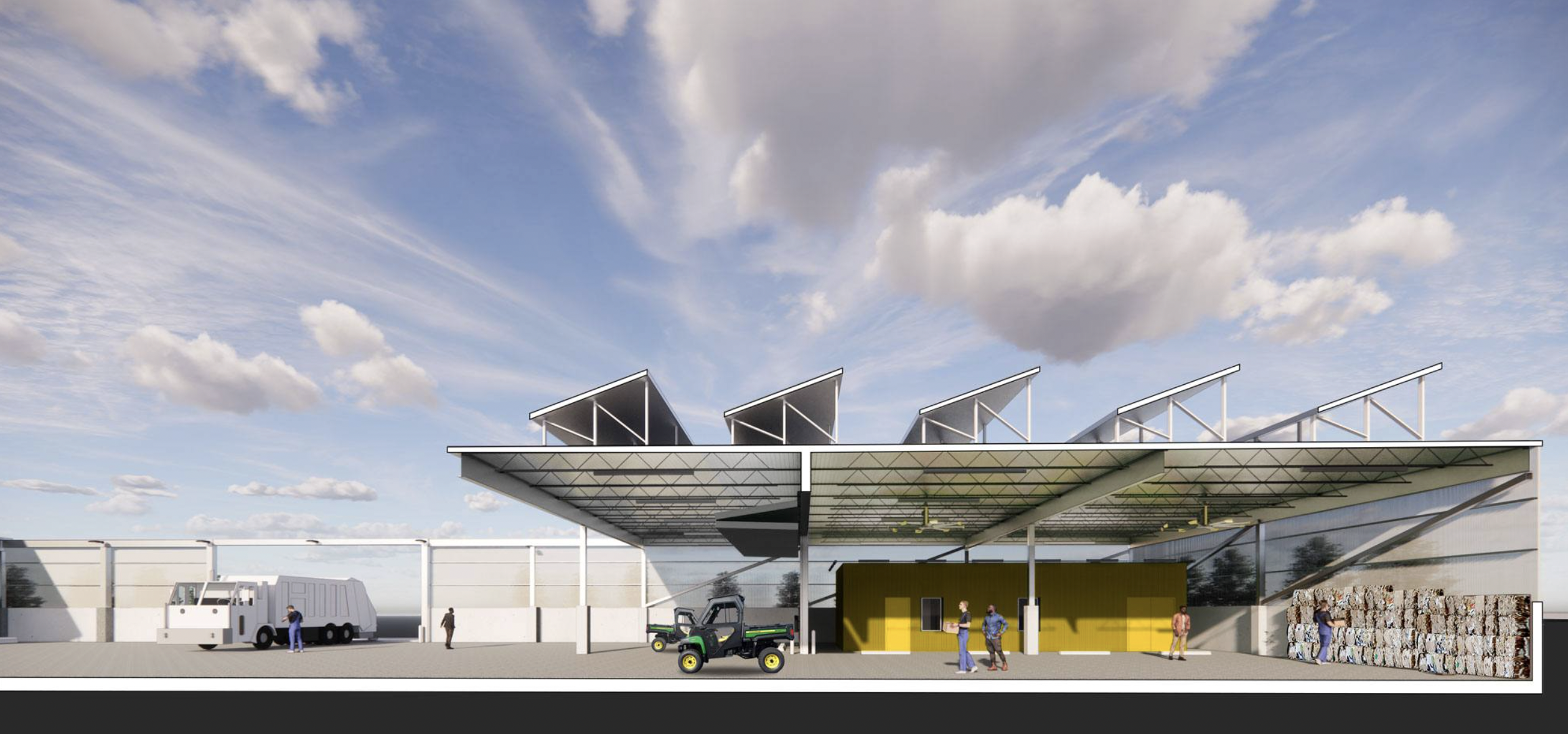
The maintenance hub at Alafia. Designed by Dattners Architects.
Alafia is located in close proximity to Belt Parkway to the south. The B-13, B-83, B-84, and Q-8 buses also stop nearby at the intersection of Erskine Street and Seaview Avenue. Also in the vicinity is the Gateway Center shopping center with stores like Shop Rite, Target, The Home Depot, BJ’s Wholesale Club, Best Buy, and several dining franchises.
The entire Alafia master plan, once the former site of the Brooklyn Developmental Center, is slated to be developed in a six-phase plan over the coming years. Phase two broke ground earlier this year and is expected to be finished in the fall of 2027.
Subscribe to YIMBY’s daily e-mail

Follow YIMBYgram for real-time photo updates
Like YIMBY on Facebook
Follow YIMBY’s Twitter for the latest in YIMBYnews
Thats great for the people who want to live there and good amount of truly affordable housing, they need to start building truly affordable housing in downtown Brooklyn and alot of them, also in better off neighborhoods, pushing the average people in undesirable neighborhoods like east newyork etc
You are right – but the reality of this society is that segregation is purposeful. Now it is based on economic status. They want people lower income people sequestered away that they don’t have to think about them. Back in the days they used to be called “limousine liberals”.
Wow, this is impressive. It’s a bit corporate campus looking, but I definitely need to go see it.
Grand to see Soviet Housing blocks making a comeback!
yes. as opposed to nothing.
Yeah. We have not progressed past the housing projects of the 50s in terms of making affordable housing looking like barracks for the working class. Who is training these modern architects?
This looks fine and highly livable.
One of their greatest achievements.
Low cost modular construction.
Lower cost housing is going to lack intricate details and use more simple designs.
We need so much more of this in so many places.
Good density, some green space, modern construction.
This is a great development.
As a current resident of this community I can speak about the neighborhood in question. It’s quiet, crime is low, convenient to everything. I get what is being referred to when it is mentioned about herding lower income indiduals. But for this community they got it right. I have always lived in quiet neighborhoods in queens but this neighborhood is a dream and I would not trade it for queens ever. It is in east New York but it doesn’t feel and look like east New York