
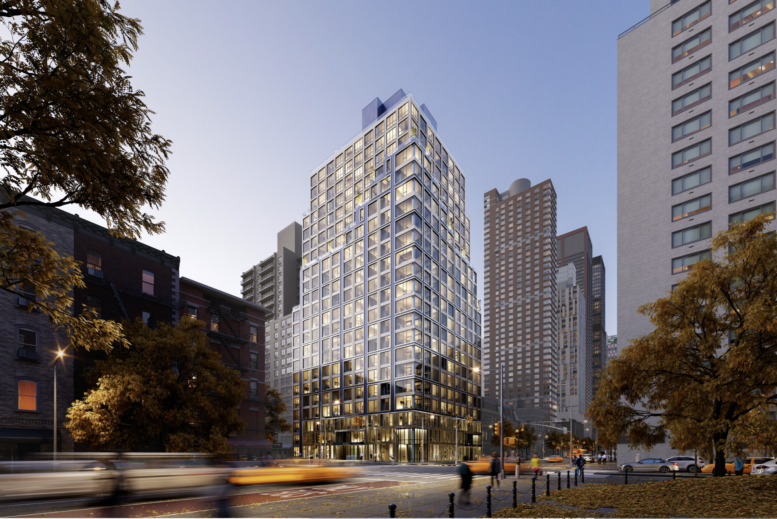
Excavation is underway at 1655 First Avenue, the site of a 23-story residential complex on Manhattan’s Upper East Side. Designed by S. Wieder Architect for Cheskel Schwimmer of Chess Builders, the project will consist of two conjoined structures standing 235 feet tall. The buildings will span a combined 193,000 square feet and yield 198 rental units with an average scope of 725 square feet, as well as ground-floor commercial space, a cellar level, and a 30-foot-long rear yard. The 12,000-square-foot property is alternately addressed as 355 East 86th Street and located at the northwest corner of First Avenue and East 86th Street.
Piling machines and excavators are on site behind the wraparound wooden fencing and have begun work around the perimeter. Below-grade earthwork should continue steadily over the next several months, followed by the formation of the foundations sometime during the winter. The new superstructure could start to rise by early spring.
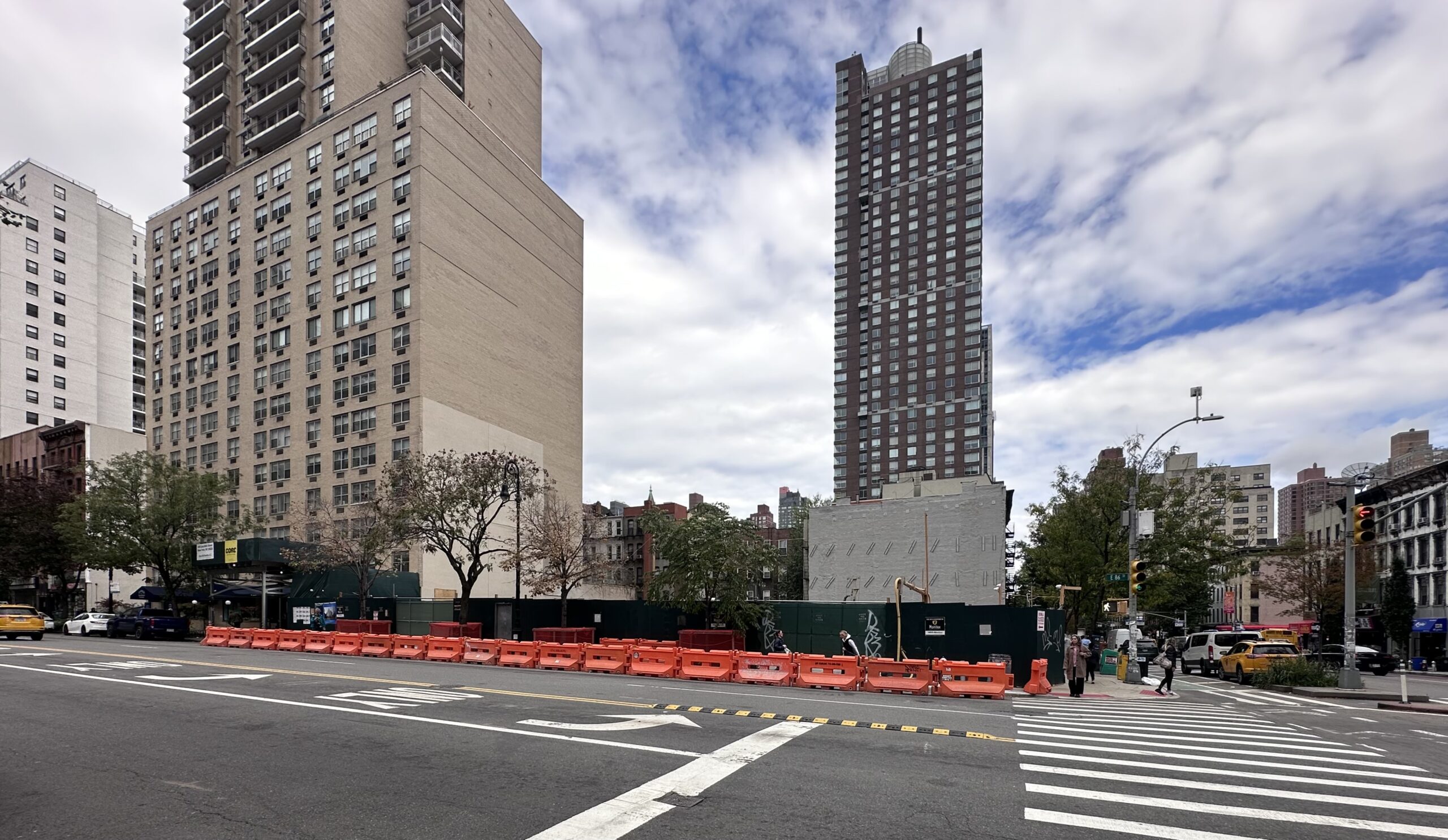
1655 First Avenue. Photo by Michael Young.
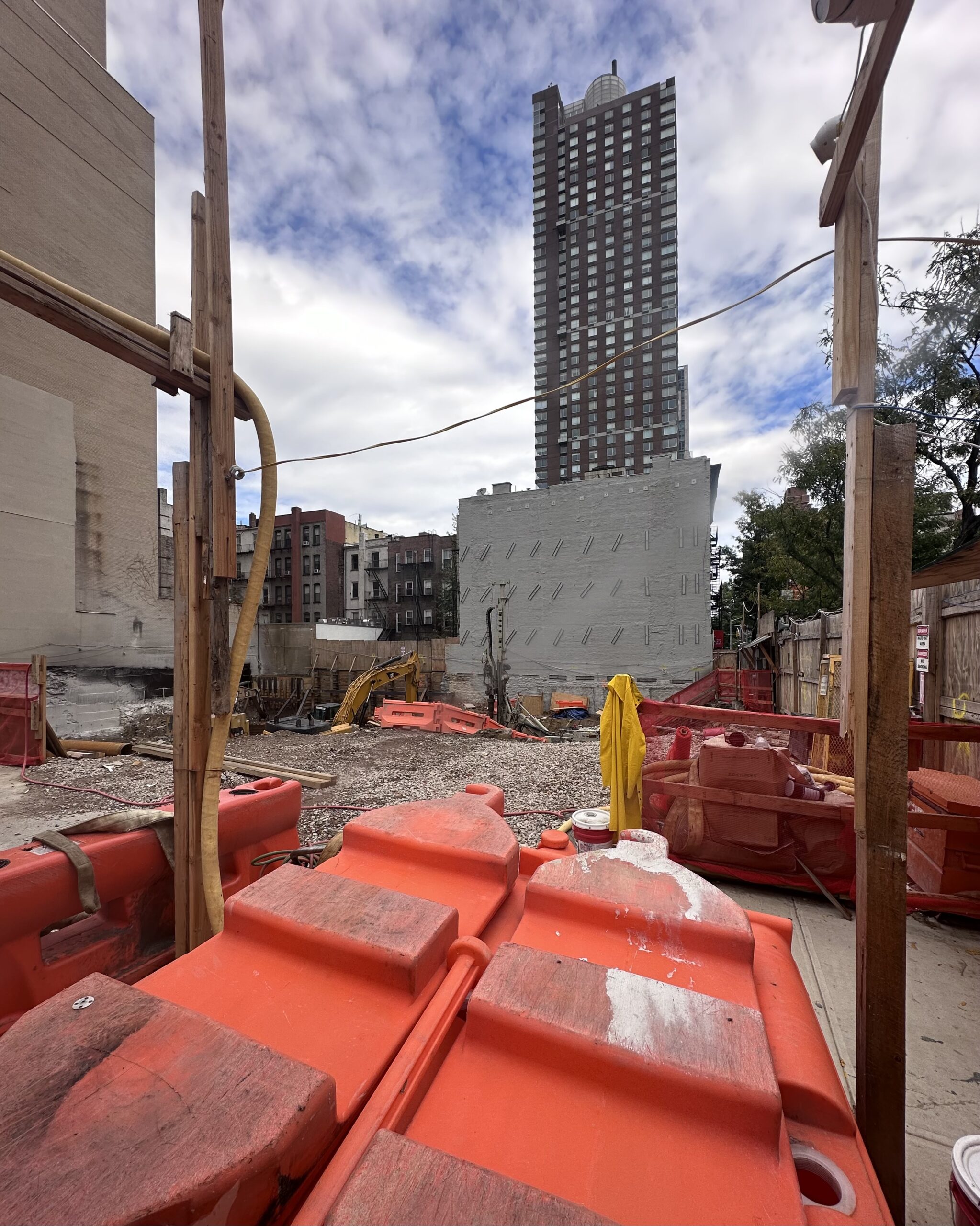
1655 First Avenue. Photo by Michael Young.
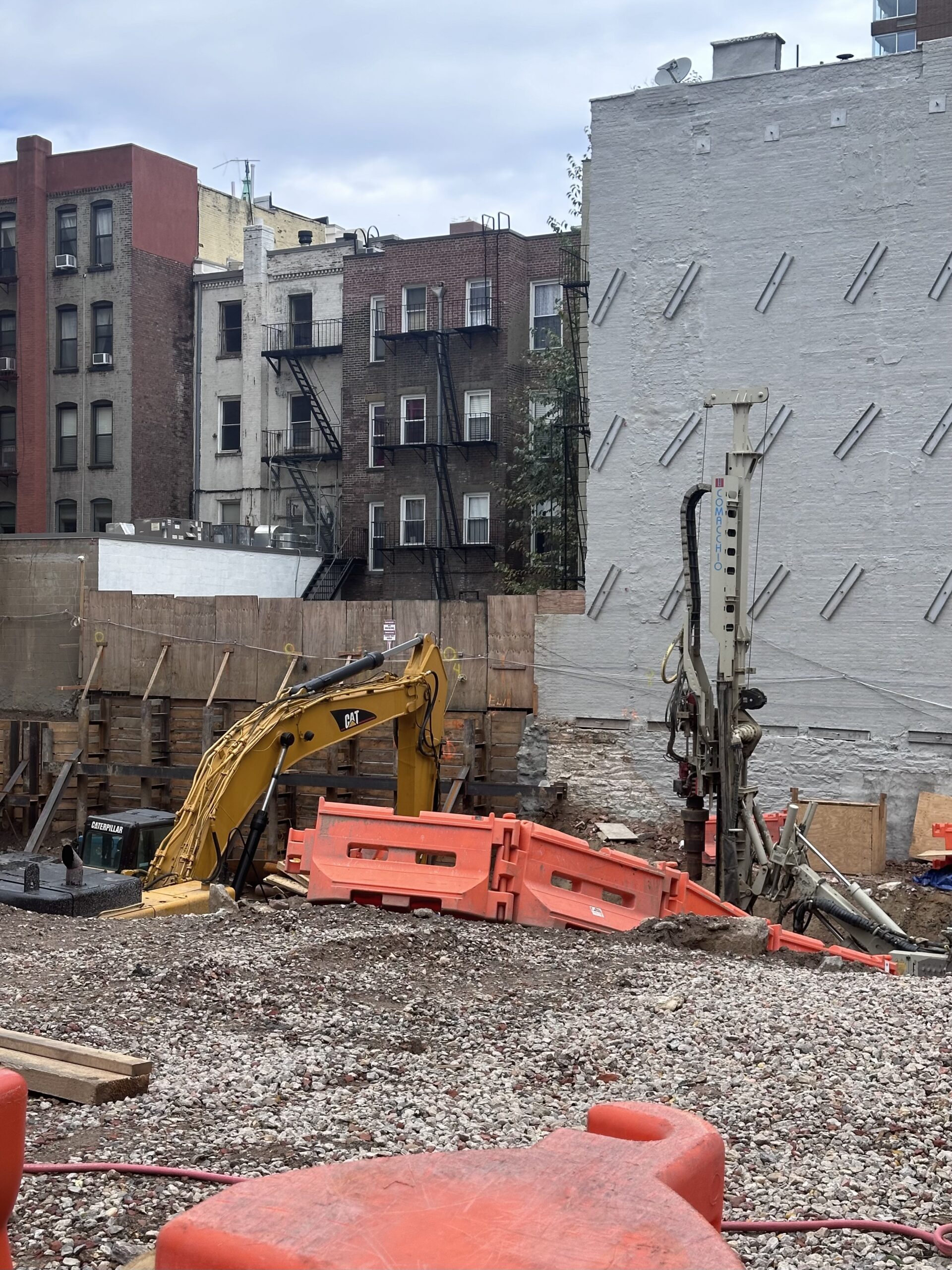
1655 First Avenue. Photo by Michael Young.
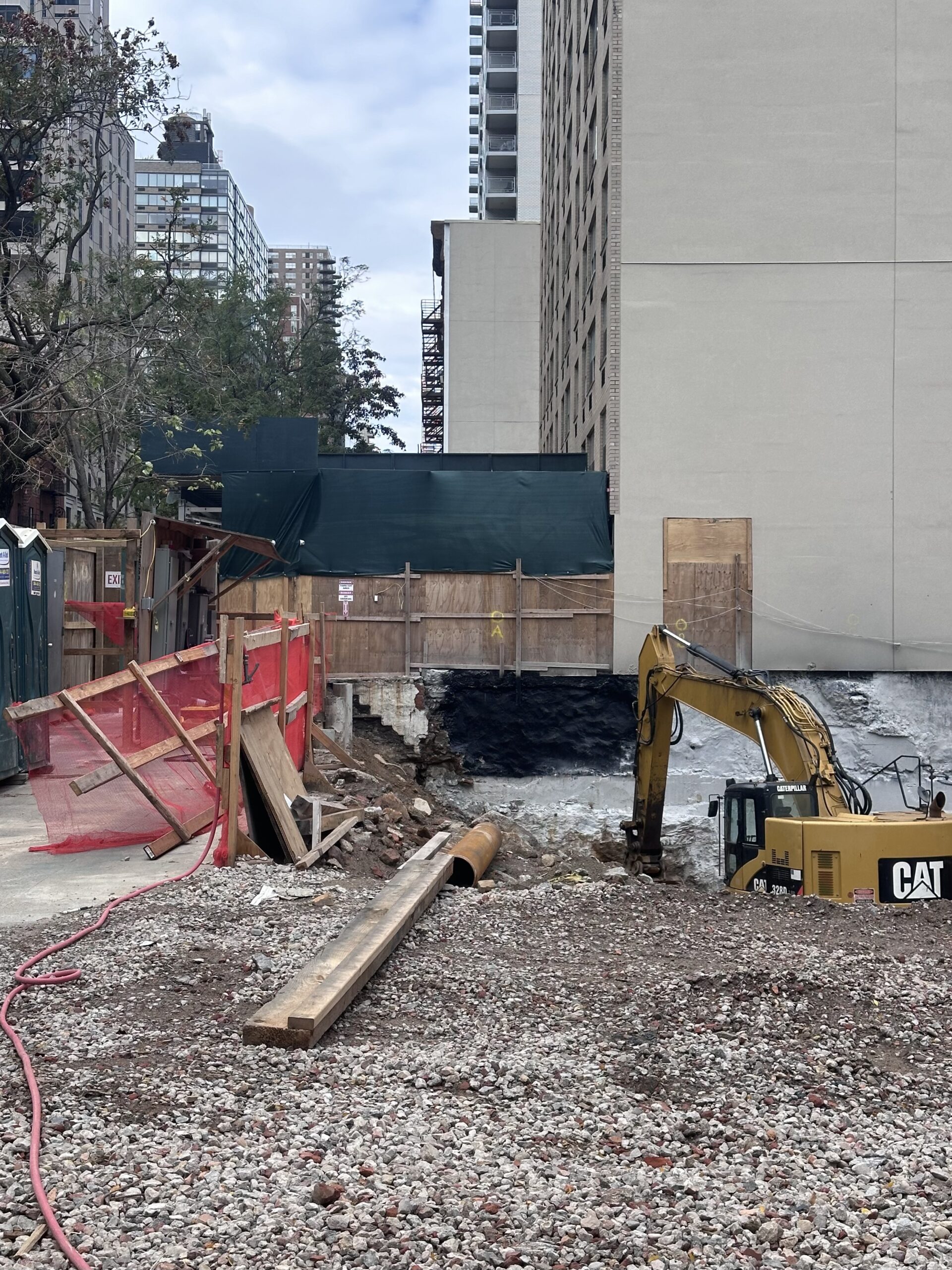
1655 First Avenue. Photo by Michael Young.
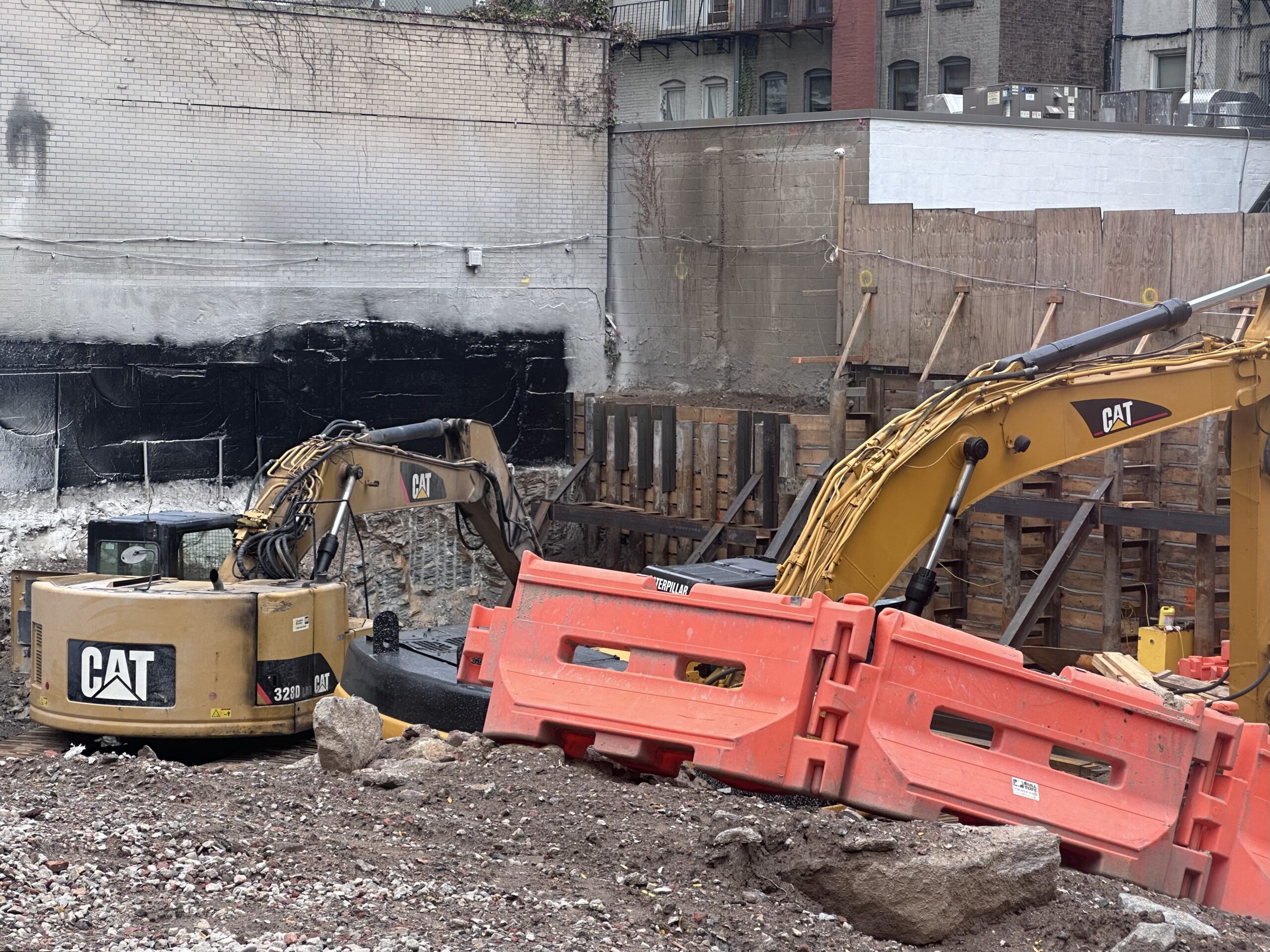
1655 First Avenue. Photo by Michael Young.
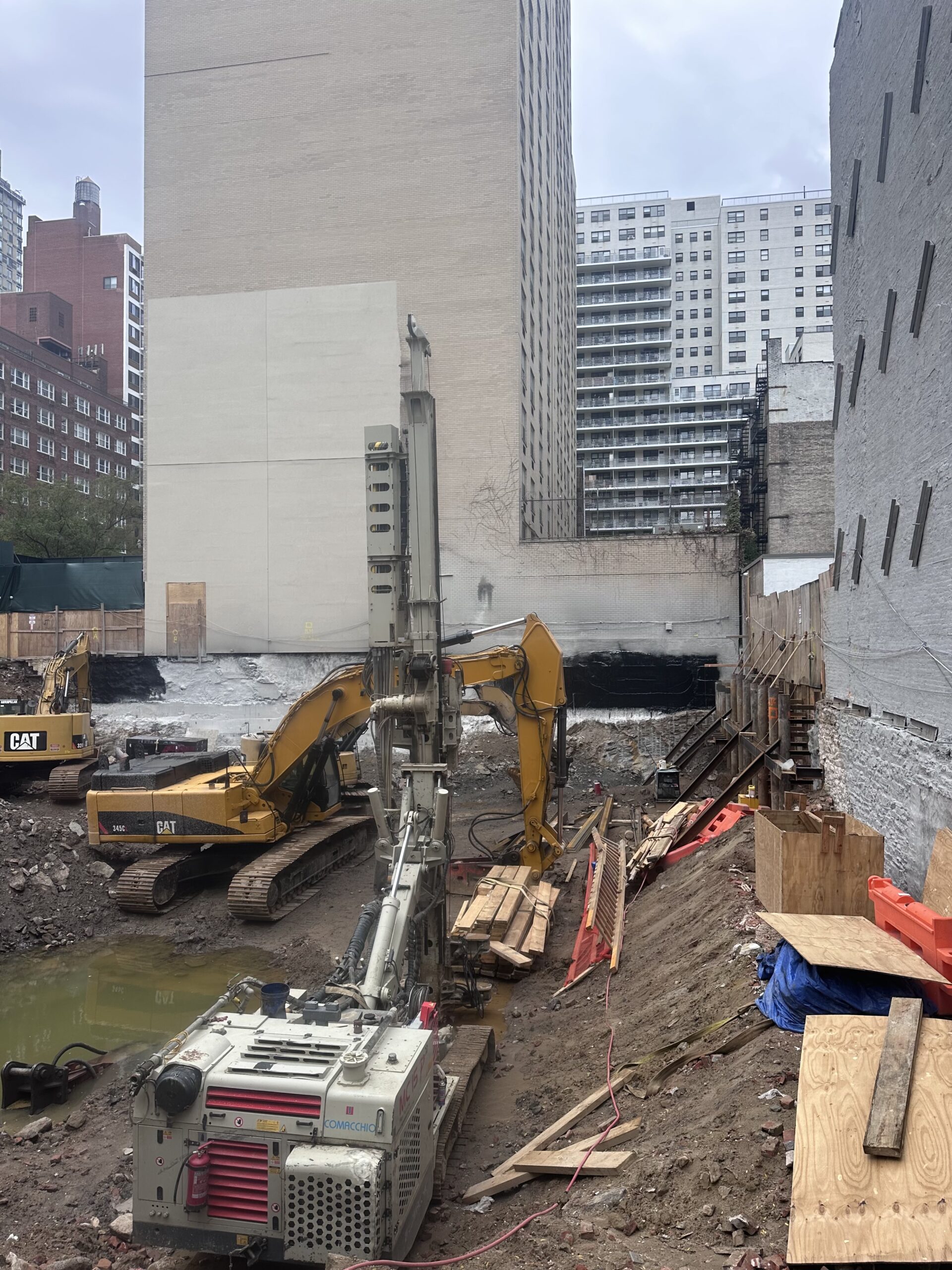
1655 First Avenue. Photo by Michael Young.
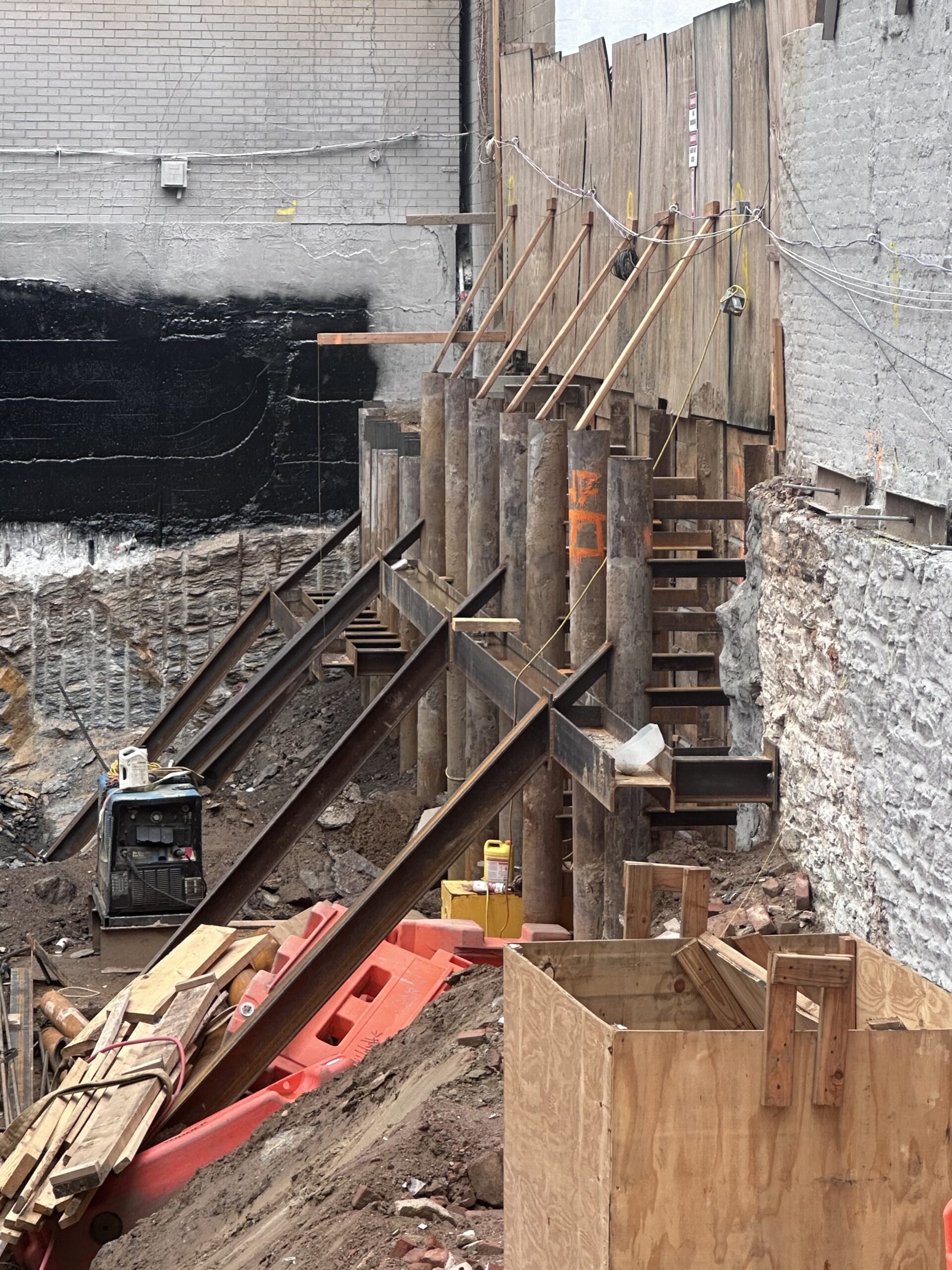
1655 First Avenue. Photo by Michael Young.
The below axonometric diagram breaks down the division of the conjoined structures. Building A will face East 86th Street, while Building B will occupy the eastern edge of the city block and stretch north along First Avenue. Both superstructures will culminate at the same height and share an outdoor roof terrace.
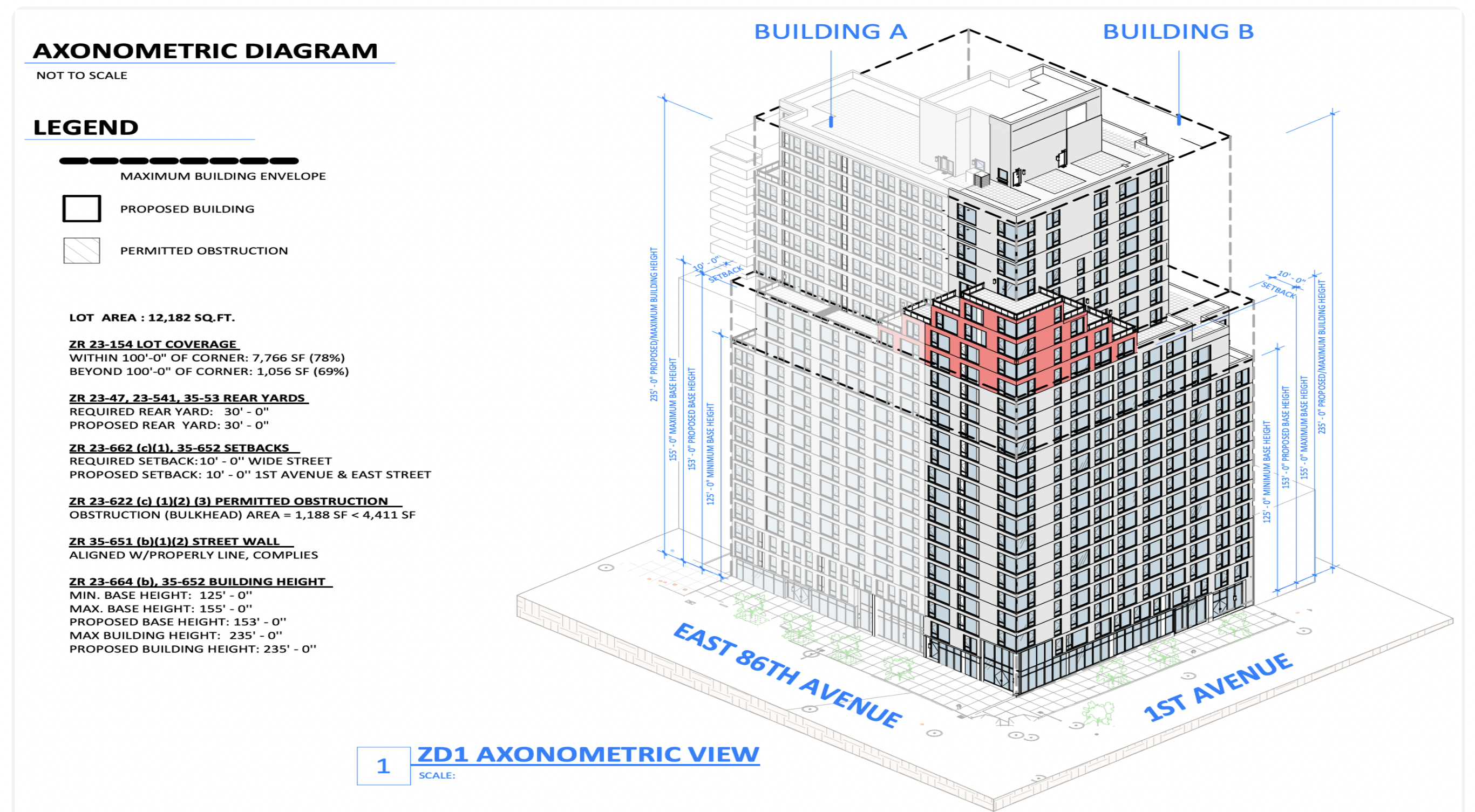
1655 First Avenue. Designed by S. Weider Architect PC.
The main rendering looks north at the entire building, highlighting its prominent position and substantial height relative to the surrounding area. Below is a view of the southern elevation that offers a closer look at the façade, which features a grid of large square windows framed by blue paneling on the bottom two-thirds of the superstructure and light gray cladding above. Stepped setbacks at the southeast corner will create space for numerous private terraces.
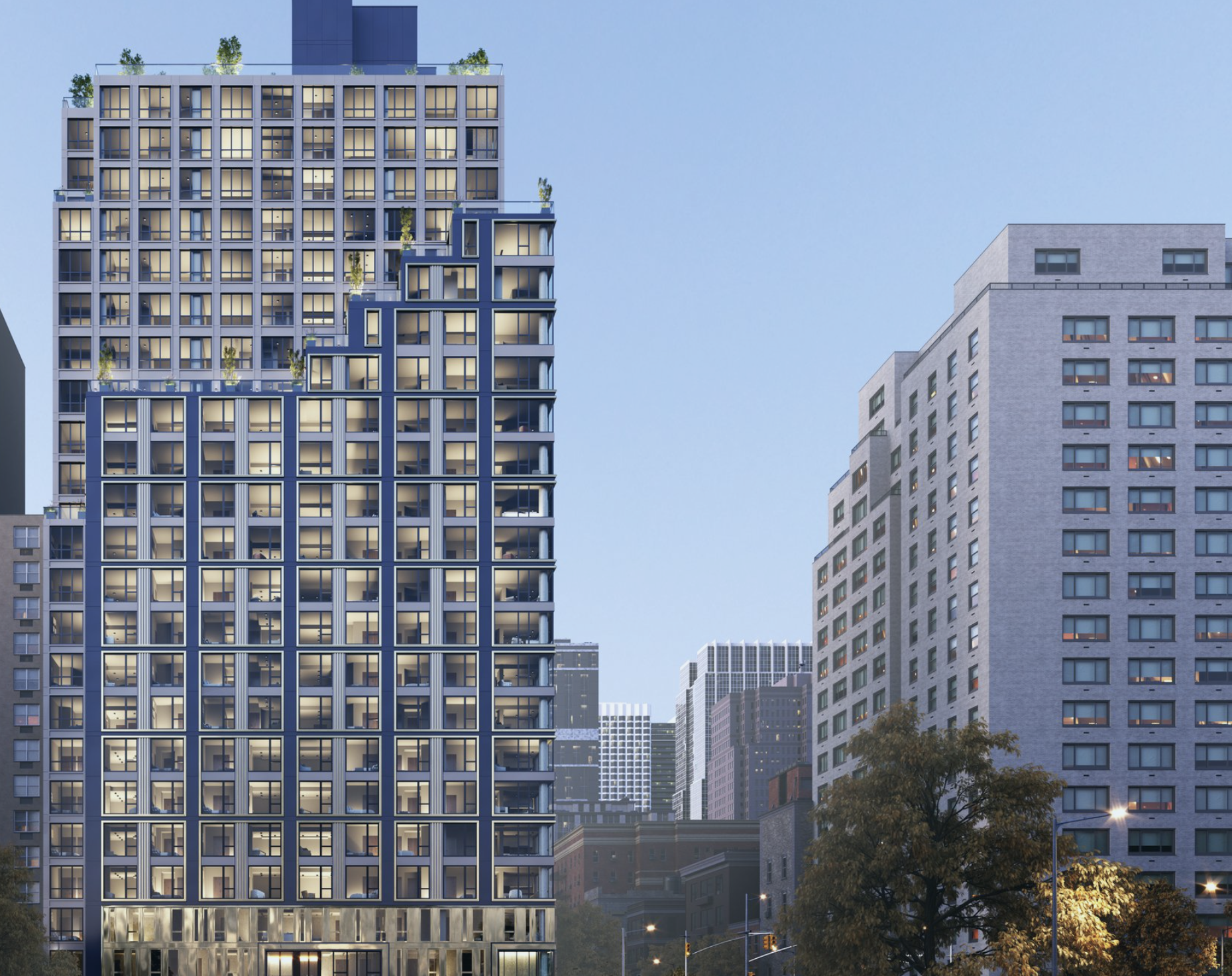
1655 First Avenue. Designed by S. Weider Architect PC.
A landscaped rooftop terrace will surround a tall mechanical bulkhead clad in blue metal paneling. Trees, shrubbery, and multiple walkways will be spread out across the shared deck.
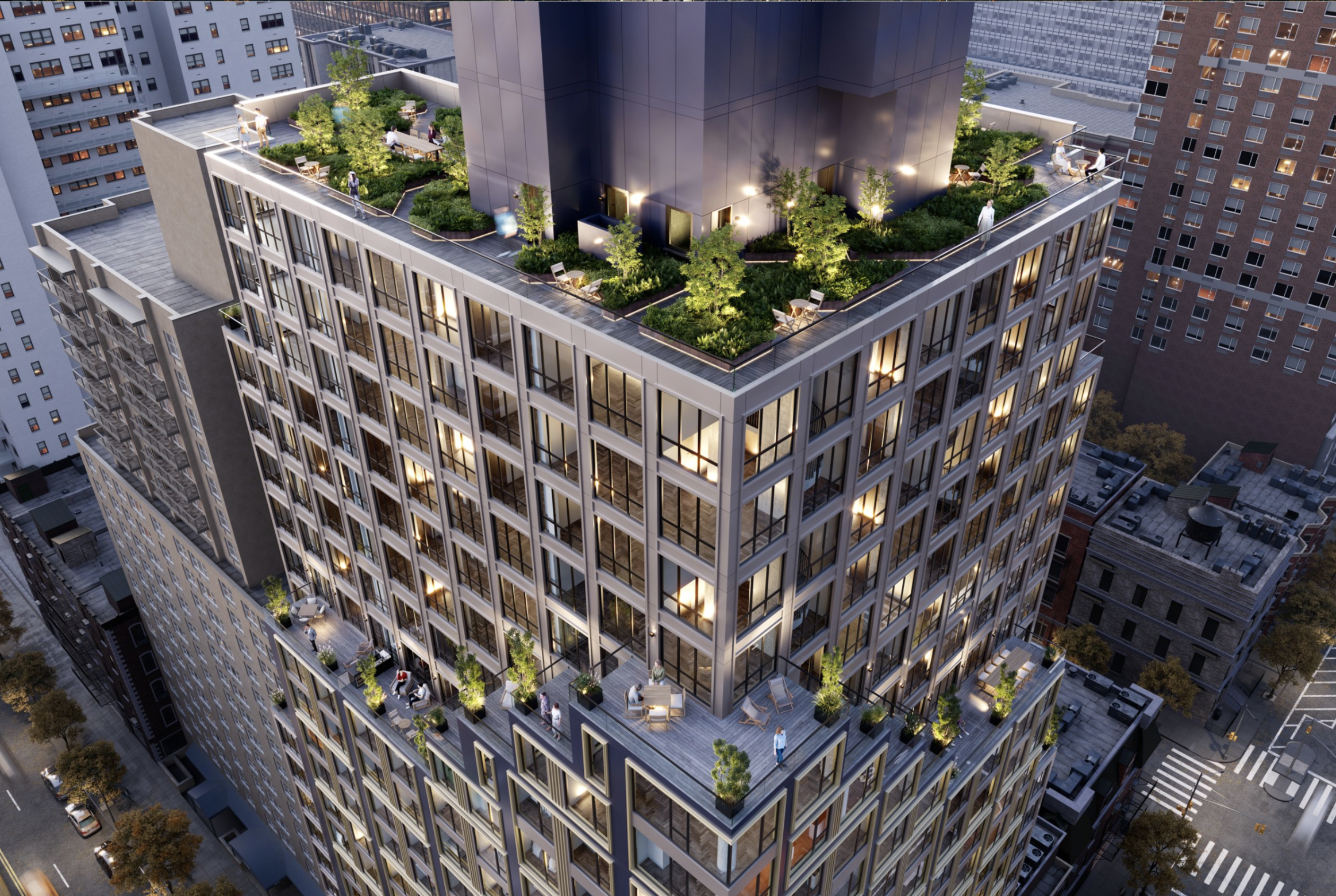
1655 First Avenue. Designed by S. Weider Architect PC.
The last two renderings below show the rear elevations of 1655 First Avenue, which will feature a stack of balconies. A private rear yard, though out of frame, will be situated on the northern corner of the development.
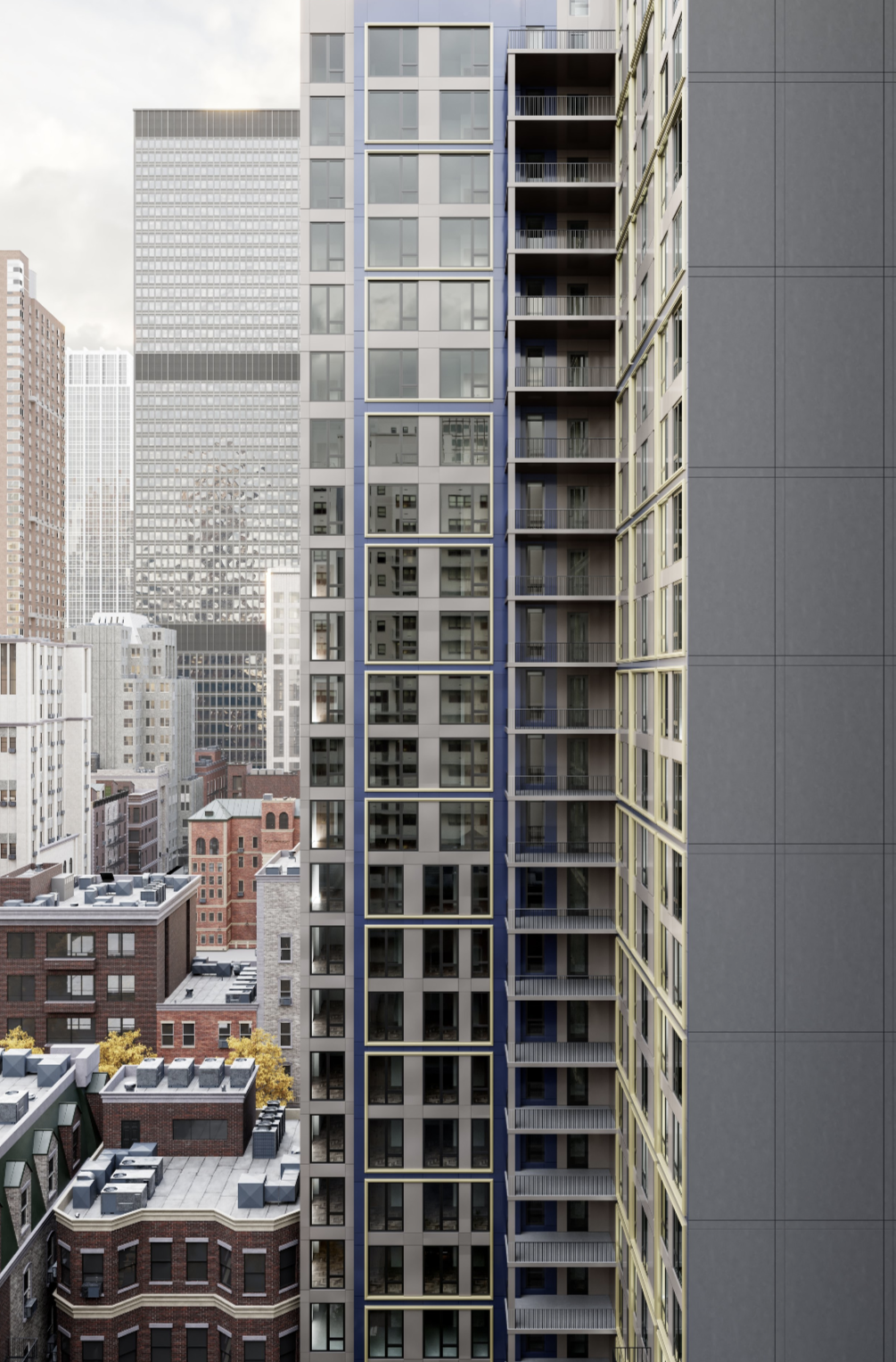
1655 First Avenue. Designed by S. Weider Architect PC.
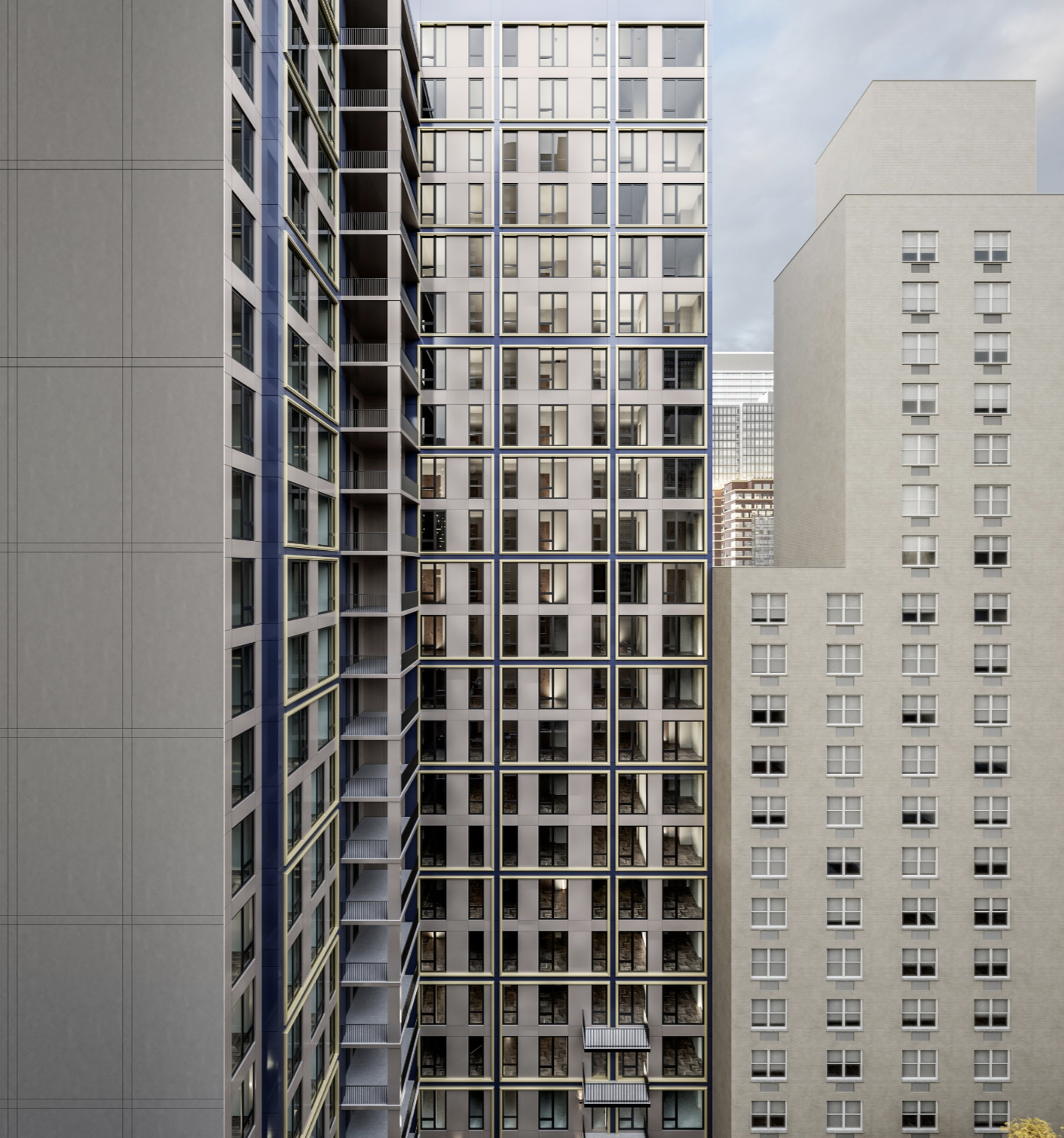
1655 First Avenue. Designed by S. Weider Architect PC.
The nearest subway from the site is the Q train at the 86th Street station to the west along Second Avenue.
A construction timeline for 1655 First Avenue has yet to be announced.
Subscribe to YIMBY’s daily e-mail

Follow YIMBYgram for real-time photo updates
Like YIMBY on Facebook
Follow YIMBY’s Twitter for the latest in YIMBYnews

So this project was delayed for many years .
Give us details. Who is the developer?
Wow, this took out several 4 story old apartment buildings, which may be the cause of the delay. No mention if the number of units lost will be added to this new project as affordable. City deals with developers can always be made.
Given the location of this building, they likely have as-of-right zoning and don’t need affordable units. If they applied for tax credits you would know it.
One thing I’d love to start seeing in this city is taking turd buildings from the 70s and 80s – real dogs – and giving them reclads/facade window enlargements/modernizations etc. That thing next door is disgusto-barfo.
Couldn’t agree more.
Yeah, I’ve thought of that for years. Let’s start with the “Nevada Towers” at 70th and Broadway, about which Paul Goldberger wrote “For this there is no excuse.” And, by the way, he wrote, there’s only one tower. In my mind’s eye, I can still see the original Nevada Hotel that stood there. But don’t hold your breath waiting for anything aesthetically recuperative to happen to those piles.
Why are there two separate buildings?
It could just be a business decision, but my immediate thought was that the developer is trying to avoid some requirement that is based on the number of units. There was another project described on this site earlier this year where that was the explanation, but I don’t recall which. The fact that this could be two 99-unit buildings makes me suspect they could be trying to avoid something that triggers with 100.
Union labor is required at 100 units or more
The law of unintended consquences